
When you see a sustainability claim on a product, it is natural to ask: Who verified it, and what does the recognition actually mean?
At dwij, this question matters because our work is built around a very specific idea: giving discarded textiles a second life through thoughtful design and upcycling.
dwij is recognised as an “Upcycled Textile Manufacturer” by the Ministry of Textiles, Government of India. For us, this recognition is meaningful because it acknowledges the nature of our work, transforming textile waste and discarded materials into useful, thoughtfully designed products.
But what does a dwij government certification actually mean?
And how is it different from certifications such as Handloom Mark or Silk Mark?
Let's break it down.
What Does dwij's Ministry of Textiles Recognition Mean?
dwij's recognition as an Upcycled Textile Manufacturer identifies the brand as an organisation working in the field of textile upcycling.
Our work centres around taking materials such as:
-
Post-consumer jeans
-
Post-industrial denim
-
Recycled PET felt
-
Textile scraps
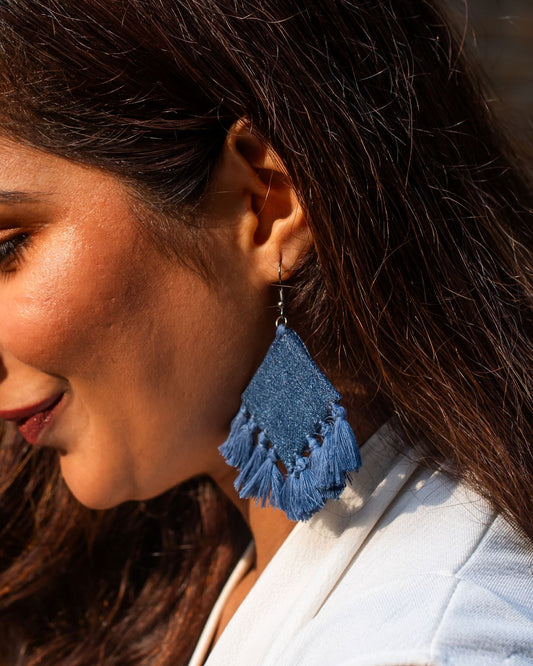
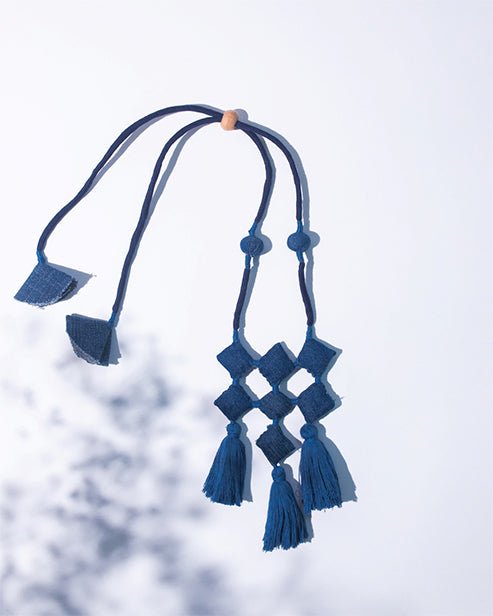
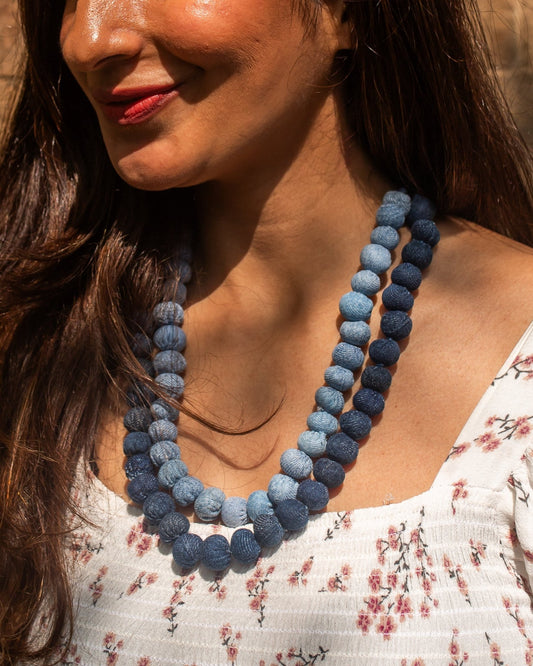
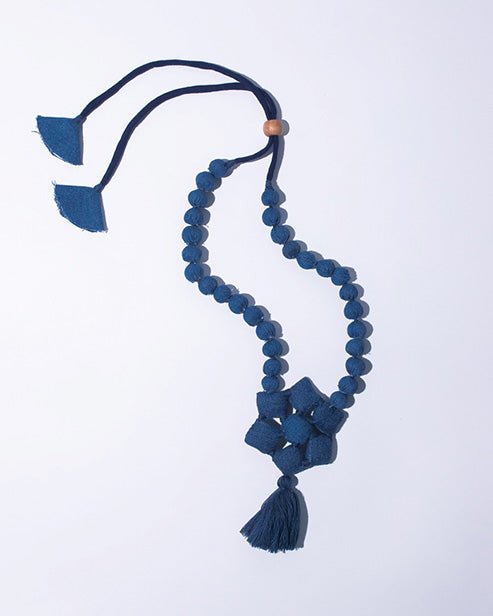
and giving them a new purpose through products such as denim bags, tote bags, backpacks, laptop sleeves, pouches, jewellery, home décor, handmade toys, and other utility accessories.

In simple terms, the recognition connects our manufacturing activity with the textile upcycling sector.
It is important to understand that this is not a claim that every individual dwij product has been separately tested or certified by the Ministry of Textiles.
Instead, it recognises the nature of dwij's manufacturing activity as an upcycled textile manufacturer.
Why Is Government Recognition Important for a Sustainable Brand in India?
Sustainability is a rapidly growing category, but not every product described as "eco-friendly" follows the same process.
Words such as:
-
Sustainable
-
Green
-
Eco-friendly
-
Recycled
-
Upcycled
-
Conscious
can mean very different things depending on how a product is designed and manufactured.
For a brand like dwij, government recognition provides an additional layer of credibility around the specific nature of our work.
Our focus isn't simply on making products that look sustainable.
We work with existing textile materials and design them into products intended for long-term use.
That distinction is important.
What Does “Upcycled Textile Manufacturer” Mean?
Upcycling means taking an existing material or product that might otherwise be discarded and transforming it into something of equal or greater utility or value.

At dwij, this means rescuing materials such as post-consumer jeans and post-industrial denim and using them as the foundation for new products.
For example, discarded denim can become a:
The objective isn't simply to reuse fabric.
It is to design something that people genuinely want to use.
That is why we place equal importance on quality, functionality, longevity, and thoughtful design.
How dwij Approaches Textile Upcycling
Our approach begins with the material.
Unlike conventional manufacturing, where a designer may begin with a uniform roll of new fabric, upcycled denim comes with its own history.
Every pair of jeans can have:
-
Different shades
-
Natural fading
-
Different levels of wear
-
Original seams
-
Pockets
-
Stitching details
-
Different fabric weights
We work around these existing characteristics rather than trying to make every piece identical.

This is one reason why no two dwij products are exactly alike.
Each denim bag, pouch, tote, or accessory can carry subtle evidence of the material's previous life.
From Discarded Jeans to Everyday Products
Our work begins with sourcing and selecting suitable textile materials.
Post-consumer jeans and post-industrial denim are assessed for their usability, strength, texture, colour, and available fabric area.
Before the material enters production, sourced denim is rigorously pre-washed through industrial washing processes by our sourcing partners to maintain high hygiene standards.
It is then handled and cut individually rather than being treated like a standard mass-manufactured fabric.
This allows us to create products such as bags, totes, backpacks, laptop sleeves, pouches, and utility accessories around the material that is actually available.
Government Recognition and Our Commitment to Quality
Being recognised as an upcycled textile manufacturer does not replace the need for good product design.
For us, sustainability has to be supported by durability.
A product that is quickly discarded creates another waste problem.
That is why we aim to create products that are:
-
Functional
-
Durable
-
Long-lasting
-
Thoughtfully constructed
-
Easy to use
-
Designed with their future in mind
We carefully select components used in our products, including premium-quality YKK Japanese zippers and sliders and rust-free, non-corrosive white metal fittings.
These details may seem small, but they contribute to how a product performs over time.
Our Low-Waste Approach
Government recognition is only one part of our larger sustainability philosophy.
At dwij, we also continuously work towards low-waste production.
When larger pieces of denim are used for a tote bag, backpack, or laptop sleeve, smaller leftover pieces don't automatically become waste.
We strive to use denim scraps for patchwork and other smaller applications wherever possible.
This allows us to extract more value from the material we have already rescued.
Our philosophy can be summarised simply:
Use what already exists. Use it thoughtfully. And keep it useful for as long as possible.
Hand Embroidery: Where Upcycling Meets Craft
Our products are not limited to plain denim.
We also work with handmade embroidery to add another layer of craftsmanship and storytelling to upcycled textiles.

Our collections have included:
These techniques allow us to combine rescued denim with traditional and contemporary handcraft.
The embroidery is not simply decorative.
It also creates opportunities to support artisans and preserve the value of handmade textile skills.
This is an important part of our people-centred approach to sustainability.
Why Our Recognition Is Different from Handloom Mark or Silk Mark
This is an important distinction.
The Ministry of Textiles is associated with several different initiatives, marks, schemes, and recognitions across India's textile ecosystem.
For example, Handloom Mark relates specifically to products made on handlooms, while Silk Mark is associated with the authenticity of pure silk.
dwij's recognition as an Upcycled Textile Manufacturer serves a different purpose.
It relates to our work as a manufacturer operating in the textile upcycling space.
So it would be inaccurate to say that the recognition means:
“Every dwij product is government-certified.”
That is not what we claim.
Instead, it means that dwij has been recognised in the category of upcycled textile manufacturing by the Ministry of Textiles.
For a brand whose core activity is turning textile waste into new products, that distinction matters.
What Does This Recognition Mean for a Customer?
When you choose a dwij denim bag, tote bag, laptop sleeve, pouch, or another upcycled product, the recognition is one part of the larger story behind the product.

It tells you about the nature of the business and the manufacturing activity we undertake.
But we don't believe a certificate alone should be the reason you choose a product.
The product itself should earn its place in your life.
It should be useful.
It should be durable.
It should be something you want to carry, use, keep, and eventually pass through another stage of its material journey.
That's why our approach combines:
Upcycled materials + thoughtful design + craftsmanship + durability + low-waste practices.
Recognition Is Meaningful. The Work Behind It Matters More.
For us, the Ministry of Textiles recognition is not the destination.
It is one acknowledgement of the work we have chosen to build our brand around.
Our larger philosophy comes from a simple belief: nothing really goes away.
Materials don't simply disappear when we throw them away.
So instead of continuously creating new products from new resources, we want to explore what can happen when existing materials are given another opportunity.
That's the meaning behind our name:
dwij - द्वि = Twice, ज = Born.
Second life.
Designing Beyond the First Life
Our sustainability philosophy goes beyond simply using discarded denim.
We believe products should also be designed with their eventual end in mind.
That's why we follow a design for disassembly approach.
Every stitch, connection, and component is considered with future recycling or upcycling in mind.

When a product eventually reaches the end of its useful life, its materials should have a better chance of being separated and finding another use.
For us, circularity doesn't begin and end with the moment a pair of jeans becomes a bag.
It is about considering the material's journey before, during, and after the product.
What Makes dwij's Approach Different?
There are many ways to talk about sustainability.
At dwij, we prefer to show it through how we work.
We:
-
Rescue post-consumer jeans
-
Use post-industrial denim
-
Incorporate recycled PET felt in selected products
-
Pre-wash sourced denim through industrial processes before production
-
Hand-cut materials individually
-
Strive for low-waste production
-
Use scraps for patchwork
-
Support artisans through hand embroidery
-
Use durable components such as YKK Japanese zippers
-
Use non-corrosive metal fittings
-
Create products designed for longevity
-
Consider design for disassembly
Together, these practices form the foundation of what we mean when we call ourselves an upcycled brand.
The Bigger Meaning of Government Recognition
A government recognition can be valuable because it gives customers another way to understand what a business actually does.

For dwij, being recognised as an Upcycled Textile Manufacturer reflects the manufacturing identity at the heart of our brand.
But our responsibility doesn't stop there.
We still need to make products people love using.
We still need to maintain quality.
We still need to reduce waste wherever possible.
And we still need to ask the most important question:
Can we give existing materials a longer, more meaningful life?
That's the question that started dwij.
And it continues to guide what we make today.
Frequently Asked Questions
Is dwij certified by the Ministry of Textiles?
dwij is recognised as an “Upcycled Textile Manufacturer” by the Ministry of Textiles, Government of India. This recognition relates to dwij's work in textile upcycling and manufacturing.
What does dwij's government recognition mean?
It recognises dwij as an organisation operating in the upcycled textile manufacturing space. It should not be interpreted as meaning that every individual dwij product has been separately tested or certified by the Ministry of Textiles.
Does Ministry of Textiles recognition mean that dwij products are government-certified?
No. dwij's recognition as an Upcycled Textile Manufacturer is different from product-specific marks or certifications such as Handloom Mark or Silk Mark.
What materials does dwij upcycle?
dwij primarily works with post-consumer jeans and post-industrial denim, along with recycled PET felt in selected products. We also strive to use smaller denim scraps through patchwork and other low-waste applications.
What products does dwij make from upcycled denim?
dwij creates a range of products including denim bags, tote bags, backpacks, sling bags, laptop sleeves, pouches, bottle holders, jewellery, home décor, handmade toys, and other utility accessories.
Does dwij use embroidery on its products?
Yes. dwij has created collections featuring Kantha hand embroidery, Kutch hand embroidery, and heart hand embroidery, combining handmade craftsmanship with upcycled denim.
Why is upcycling different from recycling?
Upcycling generally keeps an existing material in a relatively intact form while transforming it into a new product. Recycling typically involves processing a material to create a new raw material. At dwij, we primarily focus on upcycling existing denim into useful products.
How does dwij maintain hygiene when using discarded jeans?
Sourced denim is rigorously pre-washed through industrial washing processes by our sourcing partners before it reaches the dwij workshop. This allows us to maintain high hygiene standards before production begins.
Why does dwij call itself a sustainable brand?
Our approach combines textile upcycling, low-waste production, long-lasting product design, artisan craftsmanship, and design for disassembly. We aim to extend the useful life of existing textiles rather than treating them as disposable materials.
What does “dwij” mean?
dwij (द्वि = Twice, ज = Born) means “second life” or “twice born.” It represents our belief that discarded materials can have another useful chapter when they are thoughtfully redesigned.
Does government recognition alone prove that a product is sustainable?
No. A recognition or certification should always be understood in the context of what it actually covers. At dwij, we believe sustainability should also be evaluated through materials, manufacturing practices, durability, transparency, and what happens to a product at the end of its useful life.