
An embroidery motif may look beautiful on its own, but that does not mean it will work equally well on every product.
At Dwij, choosing an embroidery pattern starts with more than “Does this look pretty?”
We consider the product's size, the weight and character of the denim, how the product will be used, where the embroidery will sit, and how the motif will look against the material.
That is the heart of our embroidery design decision process.
A small floral motif might work beautifully on a hat but feel lost on a large tote. A dense design may look striking on sturdy denim but become visually heavy on a smaller accessory. And sometimes, the simplest motif is the one that gives a product exactly the right amount of character.
How Do You Choose an Embroidery Motif for a Product?
The short answer is: start with the product, not the motif.
When choosing embroidery for an upcycled denim product, five factors are particularly important:
-
Product size and available surface
-
Fabric weight and construction
-
How the product will be used
-
Motif scale and visual balance
-
Thread colour and contrast

This approach helps ensure that the embroidery feels like part of the product rather than something simply added on top.
Step 1: Start With the Product
The same motif can create completely different results depending on where it is placed.
A small accessory has limited space, so a compact motif can create a clear focal point. A larger tote gives the embroidery more room to breathe and can accommodate a more expansive composition.

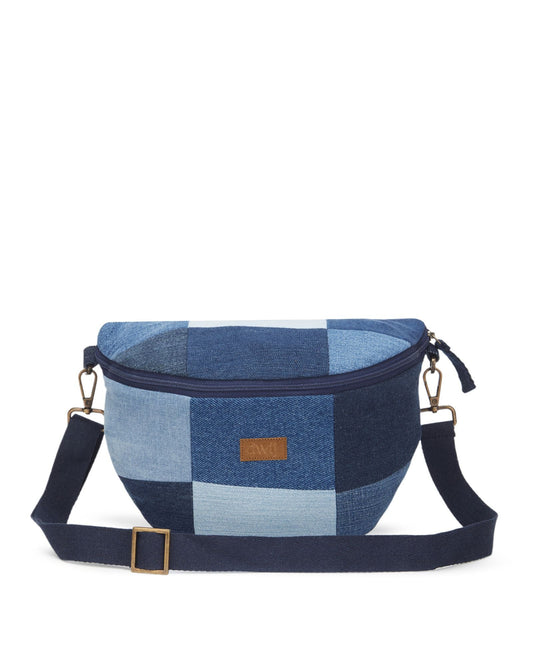
For example, a small flower or heart can work beautifully on a Mobile Sling or pouch, while a larger botanical composition can have more presence on a bigger bag or home décor piece.
This is where scale and proportion become important.
The goal is not necessarily to fill every available inch.
Sometimes leaving enough denim visible around the embroidery makes the motif more noticeable.
Step 2: Consider the Denim Before Choosing the Stitching
Dwij works with recovered denim, which means the material already comes with its own visual character.
Some pieces may have a lighter faded shade. Others may have deeper indigo tones, visible seams, pockets, or natural variations created during their previous life.
These differences influence the embroidery decision.
A dense motif can work well when the denim has enough visual and structural weight to support it. On a more visually delicate section, a lighter or more open motif may create better balance.

This is one reason choosing embroidery patterns on denim cannot be separated from understanding the material itself.
The embroidery and the denim need to work together.
Step 3: Match Motif Scale to Product Scale
Think of embroidery as part of the product's overall composition.
Small products
For smaller accessories, compact motifs usually work best.
Think:
-
Small flowers
-
Hearts
-
Leaves
-
Tiny geometric elements
-
Simple symbols
-
Short decorative borders
A motif that is too large can overwhelm a small product and leave little room for the denim itself to contribute to the design.
Medium-sized products
Medium products allow more flexibility.
A motif can become a stronger focal point without taking over the entire surface.
This is where designs such as flowers, botanical elements, geometric patterns, or small narrative motifs can work particularly well.
Large products
Larger surfaces provide more room for composition.
Instead of one tiny motif sitting in the middle, embroidery can be positioned to complement pockets, seams, panels, or other structural elements.

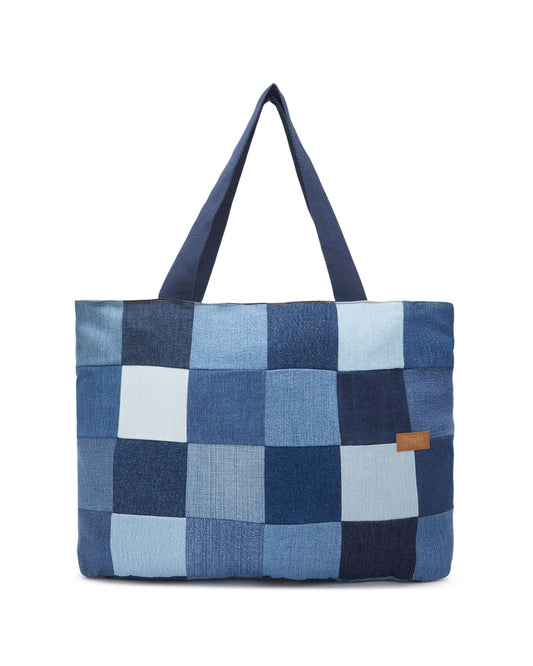
For a larger Large Tote, for example, the available surface can support a more noticeable embroidered detail while still leaving enough negative space around it.
Step 4: Ask How the Product Will Be Used
A beautiful design also needs to survive real life.
A bag is handled, carried, placed on surfaces, and moved around regularly. That means embroidery placement matters just as much as the motif itself.
For frequently handled products, we need to think about:
-
Areas that experience repeated friction
-
Handles and strap attachment points
-
Seams and construction lines
-
Places where embroidery could snag
-
How the design will look when the product is being carried
This is why a motif cannot simply be selected based on appearance.
Function influences decoration.
For example, placing an elaborate embroidered motif directly where a bag repeatedly rubs against another surface may not be the most practical design decision.
Step 5: Let the Motif Match the Product's Personality
Different products communicate different moods.
A structured everyday tote can accommodate a more prominent motif. A compact sling might benefit from something smaller and more playful.
This is where Dwij's hand-embroidered collections allow different visual languages to emerge.
Heart motifs: warmth and simplicity
A heart is immediately recognisable, which makes it effective even at a relatively small scale.

Our Heart Hand Embroidered Collection uses the motif as a simple expression of care without requiring an elaborate composition.
This makes heart embroidery particularly suited to accessories where a small detail can become the focal point.
Kantha-inspired embroidery: texture and storytelling
Kantha embroidery has a different visual rhythm.
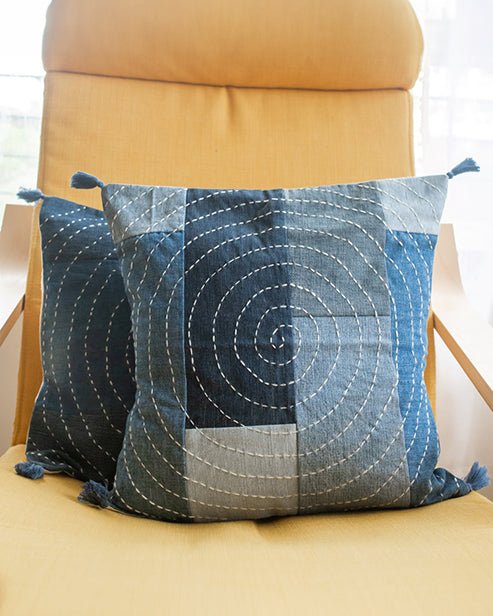
The stitches, layering, and handcrafted character can create a more textured and expressive surface.

Dwij's Kantha Hand Embroidered Collection brings this craft-led quality to upcycled denim products and home décor.
Here, the embroidery itself becomes part of the material story rather than simply functioning as a decorative logo or graphic.
Kutch-inspired embroidery: detail and visual richness
Kutch embroidery is known for its detailed and colourful visual language.

When adapting embroidery influences to products, the challenge is to retain enough detail for the motif to remain interesting while ensuring that the finished composition does not overwhelm the product.
This is particularly important when working with smaller surfaces.
Why Doesn't Every Product Get the Same Motif?
Because repetition is not the same as consistency.
A collection can feel cohesive without putting an identical embroidery design on every product.
Instead, we can create consistency through:
-
Similar thread colours
-
Related motifs
-
Repeated stitch language
-
A shared craft influence
-
Consistent placement principles
-
The use of the same upcycled denim base
This allows each product to have its own identity while still belonging to the Dwij design world.
Stitch Density Matters Too
Another important part of the embroidery design decision process is stitch density.

Dense embroidery creates a stronger visual and tactile presence. Open embroidery allows more of the denim to remain visible.
The choice depends on the product and the intended visual effect.
A sturdy denim base can support substantial embroidery, but that does not mean every design needs to be densely filled.
Sometimes a simple outline allows the recovered denim to remain the star.
For Dwij, this balance matters because the denim itself already carries a story.
Colour: Making the Motif Read Against Denim
Thread colour is not chosen independently of the base fabric.
A motif needs enough contrast to remain visible, but contrast does not always mean using the brightest possible colour.

On darker denim, lighter threads can create a crisp visual focal point. On lighter or faded denim, deeper or more saturated thread colours can provide definition.
The goal is readability with balance.
If the thread and denim are too similar in tone, an intricate motif may disappear. If the contrast is too strong for the intended aesthetic, the embroidery can dominate the entire product.
Placement Is Part of the Design
A motif can be beautifully embroidered and still feel misplaced.
Before deciding where it goes, we consider the product's construction.
Does the design sit near a pocket?
Does it work with a seam?
Will it remain visible when the bag is carried?
Does the strap cover part of it?
Is the motif centred, offset, or intentionally placed near an edge?
These questions turn embroidery placement into a design decision rather than an afterthought.

On a Baguette, for instance, the smaller surface changes how a motif needs to be scaled and positioned. On a larger tote, there is more room to create breathing space around the embroidery.
The Upcycled Denim Factor
There is one additional consideration when embroidery is being applied to upcycled denim: the base material is not always perfectly uniform.
Unlike a newly produced roll of fabric manufactured to a specific specification, recovered jeans can vary in:
-
Shade
-
Fading
-
Thickness
-
Existing seams
-
Pockets
-
Surface wear
-
Fabric weight
Rather than treating these variations only as limitations, Dwij considers them part of the design material.
A motif may be positioned specifically because a particular denim panel provides the right contrast. An existing seam may influence placement. A faded section may make a particular thread colour stand out.
In other words, sometimes the denim helps decide the embroidery.
A Simple Dwij Design Checklist
Before finalising an embroidered product, the design can be thought through using a simple checklist:
1. What is the product?
Understand its size, function, and construction.
2. How much embroidery can the surface carry?
Avoid letting the motif overpower the product.
3. What is denim like?
Look at its weight, shade, fading, seams, and existing details.
4. What motif suits the product?
Choose a design that complements its proportions and personality.
5. Where should the motif sit?
Consider visibility, seams, pockets, handles, and areas of friction.
6. What thread colour works?
Make sure the embroidery is readable without losing visual balance.
7. Will the embroidery work in everyday use?
A design needs to be beautiful and practical.
This is essentially what choosing embroidery patterns on denim comes down to: making several small design decisions that work together.
From Sketchbook to Finished Product
The final embroidered product may look simple, but the simplicity is often the result of many decisions.

The motif needs to belong to the product.
The product needs to respect the denim.
The embroidery needs to withstand its intended use.
And the finished piece needs to feel balanced when all these elements come together.
That is why Dwij's embroidered pieces are not simply “denim bags with embroidery.”
They are designed as upcycled denim products where craft and function meet.
Whether it is a small embroidered accessory, a Large Tote, a Mobile Sling, a Baguette, or an embroidered piece from the Kantha Hand Embroidered Collection, the goal remains the same: let the motif enhance the product without hiding the character of the material underneath.
Frequently Asked Questions
How do you decide which embroidery motif goes on a product?
The decision usually considers the product's size, function, denim weight, available surface, motif scale, placement, and colour contrast. The motif is selected to complement the product rather than being treated as a separate decoration.
What factors matter when choosing embroidery patterns on denim?
Important factors include denim weight, shade, surface texture, motif size, stitch density, thread colour, product construction, and how frequently the finished product will be handled.
Does the size of the product affect embroidery design?
Yes. Smaller products generally benefit from more compact motifs, while larger products can accommodate larger compositions or more generous negative space.
Why does embroidery placement matter on bags?
Bags experience regular handling and friction. Embroidery therefore needs to be positioned with straps, seams, pockets, and high-contact areas in mind so that the design remains practical as well as visually balanced.
What embroidery styles does Dwij use?
Dwij has worked with different craft-led embroidery approaches, including Daisy Hand Embroidered Collection, Flower Hand Embroidered Collection, Heart Hand Embroidered Collection, Kantha Hand Embroidered Collection, and Kutch-inspired hand embroidery. The motif and treatment depend on the product and design concept.
Can the same embroidery motif be used on different products?
Yes, but it may need to be resized, repositioned, simplified, or adapted to suit each product. A motif that works on a large tote may need a smaller or more focused version for a pouch or sling.
Why is embroidery suitable for upcycled denim?
Denim provides a relatively sturdy base for embroidery while also offering natural texture and variation. Its existing fading, seams, and shades can become part of the overall design rather than being hidden.