
How much water does it take to make a pair of jeans? A commonly cited UNEP estimate puts the water requirement at around 3,781 litres for one pair of jeans, when the lifecycle considered includes cotton production, manufacturing, transport, and washing. Other water-footprint assessments produce higher figures depending on the methodology, cotton source, production process, and what stages are included.
The important point is not that every pair of jeans uses exactly the same amount of water. It is that denim has a significant water footprint, and much of that footprint begins before a pair of jeans reaches a wardrobe.
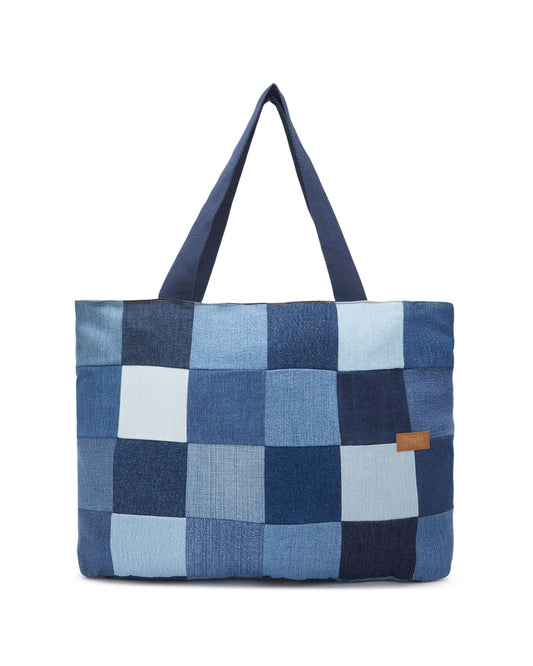
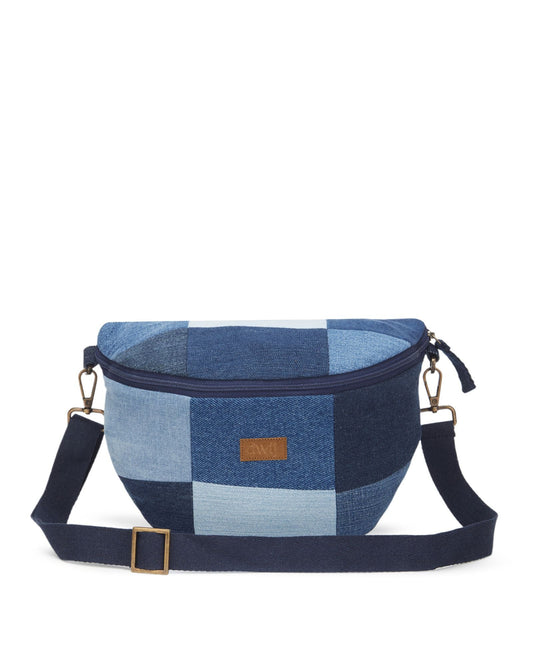
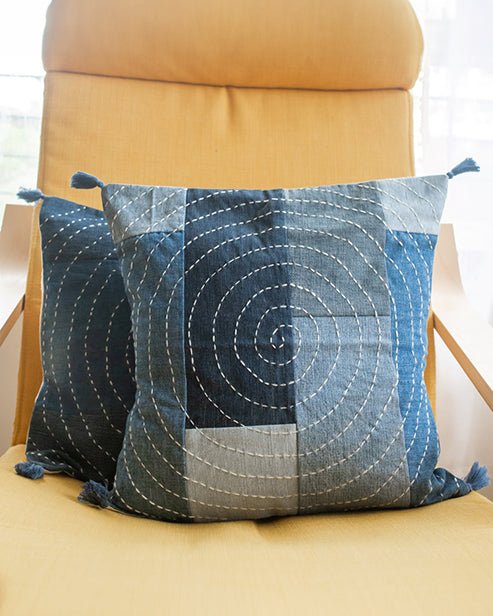
At Dwij, this understanding is central to why we choose upcycling over producing more. Instead of starting with newly grown cotton and new denim, we rescue post-consumer jeans and post-industrial denim and give them another life as handcrafted bags, jewellery, pouches, accessories, and home products.
How Much Water Does It Take to Make Jeans?
The answer depends on how "water use" is calculated.
UNEP cites an estimate of approximately 3,800 litres of water to produce a pair of jeans. An earlier UNEP assessment gives a figure of 3,781 litres, while noting that estimates can vary significantly depending on production conditions.
The Water Footprint Network also explains that a product's water footprint includes water associated with different stages of production, from growing cotton through processing and manufacturing. Its global-average data for cotton fabric show that water footprints can vary substantially by location and production system.
So, rather than treating one number as universal, it is more accurate to think of denim water usage as a range influenced by the entire supply chain.
Denim Water Usage at a Glance
|
Stage |
Why Water Is Used |
Why It Matters |
|
Cotton cultivation |
Irrigation and crop production |
Often the largest part of the water footprint |
|
Spinning & weaving |
Processing cotton into fabric |
Adds to the overall manufacturing footprint |
|
Dyeing |
Creating denim's characteristic colour |
Requires water and generates wastewater |
|
Washing & finishing |
Creating softness, fades and other effects |
Can significantly increase processing water |
|
Consumer use |
Washing jeans at home |
Adds water and energy use over the product's life |
The exact share of water attributed to each stage varies by methodology, geography, farming practices, and manufacturing techniques. Water Footprint Network data show that cotton's footprint can differ dramatically between producing regions, making a single global percentage difficult to apply to every pair of jeans.
Why Does Cotton Require So Much Water?
Cotton is an agricultural crop, so its environmental footprint begins in the field.
Depending on where it is grown, cotton may rely heavily on rainfall, irrigation, or a combination of both. The Water Footprint Network notes that the water footprint of cotton fabric is strongly influenced by its production location, with significant differences between countries.
This is important because the water associated with denim isn't simply the water used inside a textile factory.
It can begin much earlier with the cultivation of the cotton that eventually becomes the denim fabric.
What Happens During Denim Manufacturing?
Once cotton becomes fabric, additional water can be used during dyeing, washing, bleaching, and finishing.
Indigo dyeing gives denim its familiar blue appearance, while washing and finishing processes can create different textures, fades, and finishes.
UNEP notes that denim manufacturing can require substantial amounts of water, energy, and chemicals, particularly when special effects are created.
This is why improving the manufacturing stage can make a meaningful difference.
Newer technologies are already demonstrating that denim finishing doesn't necessarily have to depend on the same water-intensive processes used traditionally. Research on laser and ozone technologies has found significant potential for reducing water use during denim finishing, although the exact savings depend on the process and production setup.
What About the Water Used to Wash Jeans at Home?
The water footprint of jeans doesn't necessarily end when you buy them.
Every washing cycle can add to the resources associated with a garment's use phase.
This is why garment longevity matters.
Wearing jeans for longer, washing them only when necessary, and following appropriate care instructions can reduce the resources associated with repeated laundering.
There is an important distinction here: the often-cited 3,781-litre UNEP figure is a lifecycle estimate that already incorporates washing in the assessment referenced by UNEP; it should not simply be added to another full production figure as though it were always a separate additional amount.
That distinction matters when discussing denim water usage statistics accurately.
What Is the Cotton Water Footprint?
The cotton water footprint measures the water associated with producing cotton, including water consumed during cultivation and the water-related impact of production.
The Water Footprint Network reports a global-average water footprint of approximately 10,000 litres per kilogram of cotton fabric, while also highlighting substantial regional variation. For example, its data show a much higher footprint for cotton fabric produced in India than some other production regions.
This doesn't mean every pair of jeans automatically has a 10,000-litre footprint. Garment weight, cotton source, farming conditions, manufacturing methods, and the definition of the water footprint all affect the final number.
The bigger lesson is that material choices and supply chains matter.
Why Upcycling Denim Can Make a Difference
At Dwij, we approach this issue from a simple starting point:
Why create new denim when useful denim already exists?
Our products begin with post-consumer jeans collected through collection drives and second-hand markets, along with post-industrial denim and fabric scraps.
Instead of sending those textiles towards disposal, we give them another purpose.
The process includes:
-
Sourcing rescued denim and textile materials
-
Sorting materials according to quality and suitability
-
Washing them rigorously for hygiene
-
Cutting them according to the product design
-
Stitching them into functional products
-
Ironing and finishing each handcrafted piece
This approach doesn't eliminate the environmental footprint of textiles. What it does is extend the useful life of materials that already exist and avoid starting another product journey with newly produced denim.
That is the principle behind Dwij's name "twice born."
From Water-Intensive Denim to a Second Life
The most effective way to reduce the need for resources associated with a new garment is often to keep existing materials in use for longer.
Buying second-hand, repairing garments, reusing textiles, and choosing upcycled products can all contribute to a more circular approach to fashion.
For us at Dwij, upcycling is not simply about changing the appearance of old jeans.
It's about recognising that the material still has value.
A pair of jeans that has already required cotton cultivation, textile processing, dyeing, stitching, and transportation doesn't suddenly become worthless because its first owner no longer needs it.
We can give that denim another purpose.
What Can We Do to Reduce Denim's Water Footprint?
There isn't one single solution, but several choices can help reduce the demand for new textile production and unnecessary water use:
-
Wear garments longer instead of replacing them frequently.
-
Wash jeans only when necessary and follow care instructions.
-
Choose second-hand or upcycled denim when suitable.
-
Repair damaged garments instead of immediately discarding them.
-
Choose durable products designed for repeated use.
-
Support circular design that keeps materials in use for longer.
At Dwij, this is where our philosophy of "From Waste to Wonder – Upcycled with Purpose" comes into practice.
Final Thoughts
So, how much water does it take to make jeans? A widely cited UNEP estimate is approximately 3,781 litres per pair, but the actual water footprint varies depending on what stages are included and where and how the jeans are produced.
The number is important, but the bigger story is what happens next.
When we continue using, repairing, reusing, and upcycling textiles, we reduce the need to repeatedly create new materials from the beginning.
At Dwij, we choose to rescue denim that already exists and transform it into something useful again.
Because sometimes the most sustainable material isn't a new alternative.
It's the material we already have.
Frequently Asked Questions
1. How much water does it take to make one pair of jeans?
A commonly cited UNEP estimate is approximately 3,781 litres of water for a pair of jeans. The exact figure varies depending on the production method, location, cotton source, and lifecycle stages included in the calculation.
2. Why do jeans have such a large water footprint?
The water footprint of jeans begins with cotton cultivation and continues through textile processing, dyeing, finishing, and other stages of production. Cotton's water footprint varies considerably depending on where and how it is grown.
3. Does washing jeans at home add to their water footprint?
Yes. Washing contributes to the use-phase footprint of clothing. Washing jeans only when necessary and extending their useful life can help reduce additional resource use.
4. Can upcycling denim reduce water consumption?
Upcycling does not erase the original water footprint of denim, but it keeps existing material in use and can reduce the need to produce new denim for another product. At Dwij, we rescue post-consumer jeans and post-industrial denim and transform them into new handcrafted products.
5. Why does Dwij use rescued denim?
Dwij uses rescued post-consumer jeans and post-industrial denim because we believe useful materials deserve a second life. By transforming existing textiles into handcrafted bags, jewellery, pouches, accessories, and home products, we put the principle of circular design into practice.