
Building a social enterprise is not only about having a meaningful idea. It is about turning that idea into a business that can operate consistently, serve customers, support people, and create measurable impact.
For dwij, our experience with NSRCEL at IIM Bangalore helped us understand this more clearly. As a circular-fashion social enterprise transforming post-consumer jeans and post-industrial textile waste into useful products, we were learning not just how to make products, but how to build the systems around them.
Our biggest lesson was simple: purpose can start a business, but structured processes help it grow.
What Did Dwij Learn From Its Business Incubation Journey?
The biggest learning from the dwij business incubator story was that a social enterprise needs the same operational discipline as any growing business.

As the business grows, the founder cannot solve every problem personally. Clear workflows, defined responsibilities, diversified revenue channels, customer engagement and responsible material management become essential.
For dwij, this meant moving from everyday firefighting towards more structured decision-making without losing sight of why the business existed in the first place.
From an Idea About Waste to a Social Enterprise
The story of dwij began with a question: what happens to things after we stop using them?
Founder Soumya Kalluri, a Mechanical Engineer with a Master's in Commercial Vehicle Technology from Germany, had already encountered the idea of resource impact through her work on Life Cycle Assessment at John Deere in Germany.
That experience shaped her understanding that materials do not simply disappear when we discard them. Her concerns around fast fashion and textile waste eventually led to the creation of dwij, with the aim of making upcycling a norm rather than an exception.
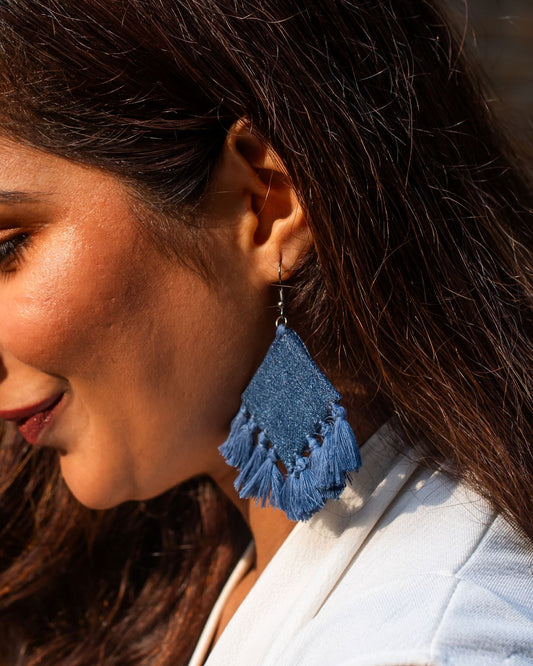
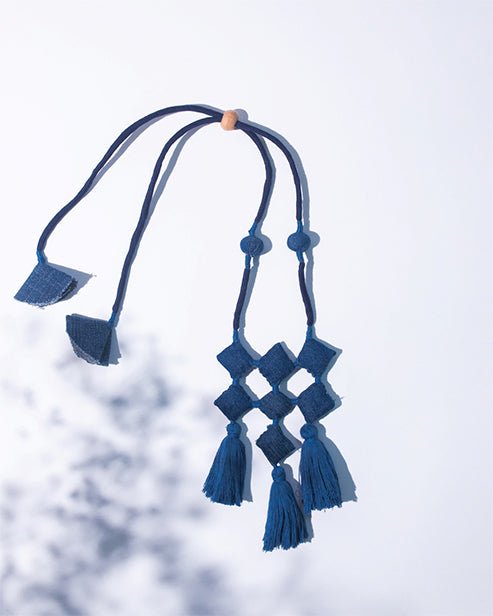
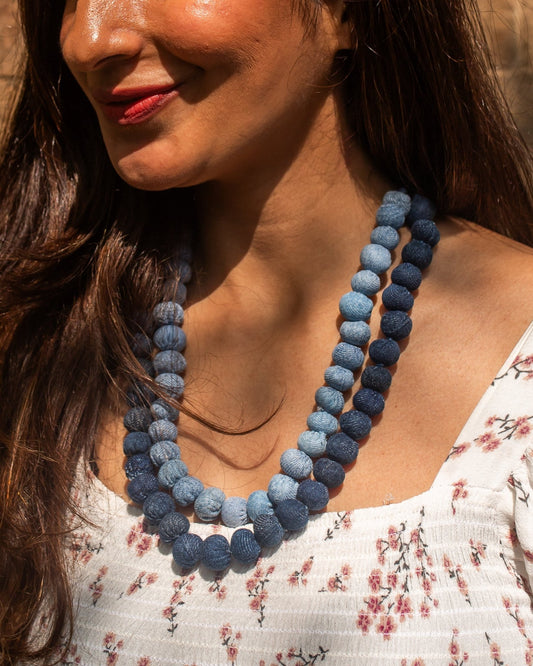
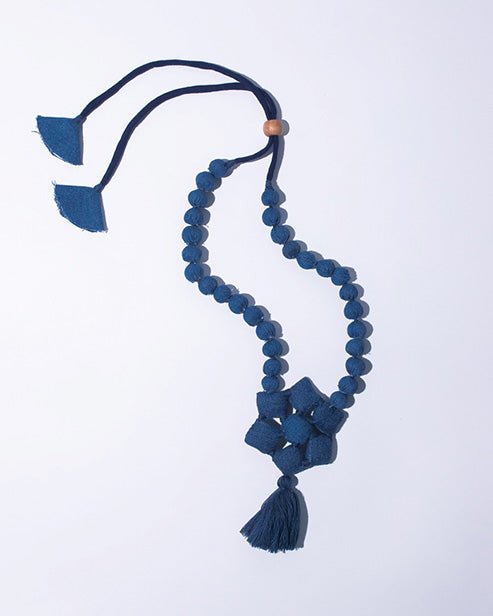
Today, dwij rescues post-consumer jeans and post-industrial denim and turns them into utility accessories, bags, jewellery, toys and home décor.
But creating an upcycled product is only one part of building a social enterprise.
The bigger challenge is building a business around it.
What Is the Role of NSRCEL in a Startup's Growth?
NSRCEL, the entrepreneurship and innovation hub at IIM Bangalore, works with entrepreneurs through different incubation and startup programmes.
For a young social enterprise, an incubation environment can provide something that founders often lack in the early stages: structured thinking.

Instead of looking at a business only through the lens of its product, incubation encourages founders to think about questions such as:
-
How does the business make money?
-
Which revenue streams can support long-term growth?
-
Where are operational bottlenecks?
-
Which decisions should remain with the founder?
-
What can be delegated?
-
How can processes become repeatable?
-
How can impact and commercial sustainability coexist?
For dwij, these questions became particularly important because our business sits at the intersection of upcycling, manufacturing, craft, community and commerce.
Lesson 1: Processes Don't Kill Creativity—They Create Space for It
One of the most important lessons from the incubation journey was the value of structured processes.
In an early-stage business, it is easy for everything to become urgent.
A sourcing question becomes a founder question.
A production issue becomes a founder question.
A sales decision becomes a founder question.
A customer request becomes a founder question.
That may work when a business is very small.
It becomes difficult as the business grows.
For dwij, building clearer workflows helped us understand that processes are not about making a creative business rigid. They are about reducing unnecessary chaos.
When routine decisions have a process, the team has more room to focus on product development, customer experience, innovation and long-term strategy.
This is particularly important for an upcycling business because every batch of denim can arrive in different shades, weights, sizes and conditions.

Our upcycled denim products are tailor-made rather than mass manufactured, and the material itself requires thoughtful handling.
Lesson 2: A Social Enterprise Still Needs a Strong Business Model
A meaningful environmental mission does not automatically create a sustainable business.
That was another important learning.
At dwij, our purpose is rooted in giving discarded textiles a second life. But we also have to think about:
-
product-market fit
-
pricing
-
customer needs
-
production capacity
-
sales
-
cash flow
-
repeat purchases
-
B2B opportunities
-
operational efficiency
This is where the nsrcel social enterprise experience became particularly relevant.

A social enterprise has two questions to answer simultaneously:
Does the business create value for customers?
and
Does the business create meaningful social or environmental value?
For us, both matter.
A beautiful upcycled bag still needs to be functional.
A sustainable product still needs to be durable.
A circular idea still needs a viable business model.
That balance is central to how we think about dwij.
Lesson 3: Diversifying Revenue Matters
Another key learning was the importance of not depending on a single route to market.
For a product-based social enterprise, this can mean building relationships across both retail and B2B channels.
For dwij, this includes individual customers looking for everyday products as well as opportunities such as corporate and wedding gifting.
Our products can therefore serve different everyday needs from Convertible Tote Bags and laptop sleeves to pouches, accessories and home décor.

For larger requirements, customised corporate gifting also creates an opportunity to introduce upcycling to organisations at a different scale.
The lesson was not simply "sell more."
It was to understand who the customer is, what problem the product solves, and which channels can help the business grow responsibly.
Lesson 4: Founders Need to Stay Close to Customers
As a business grows, it can be tempting to completely hand over sales and customer conversations.
But especially in the early stages, founders can learn a lot by staying close to the market.
Customer conversations reveal things that spreadsheets cannot always show.

Why did someone choose an Ocean Tote instead of another bag?
Why does someone prefer a Convertible Tote?
What makes a customer hesitate before buying an upcycled product?
Which features matter more pockets, size, versatility, styling or durability?
These conversations help turn customer feedback into better products.
For dwij, this is particularly valuable because our products are created from rescued materials. The material has constraints, but those constraints can also become opportunities for distinctive design.
Lesson 5: Circularity Has to Continue Beyond the Product
Sustainability cannot stop at making something from waste.
This is one of the principles that continues to shape dwij.
Our approach begins with rescuing post-consumer jeans and post-industrial textile waste, but circular thinking also influences how products are designed.
We work towards low-waste practices by using denim scraps where possible, including them in patchwork and other applications. We also consider what happens to a product at the end of its useful life through our design-for-disassembly philosophy.
The idea is straightforward:
If something has been designed thoughtfully, its materials should ideally have another opportunity after its first useful life.
That means considering stitches, connections, hardware and materials, not just the appearance of the finished product.
Lesson 6: People Are Part of the Impact
A social enterprise cannot talk about impact only in terms of materials.
People are part of the system too.
At dwij, our work involves skilled people who cut, stitch, finish and embellish products, along with artisans and women-led self-help groups.

Our hand-embroidered collections, including Kantha Hand Embroidered Collection, Kutch Hand Embroidered Collection, Daisy Hand Embroidered Collection, Flower Hand Embroidered Collection and Heart Hand Embroidered Collection, bring craft and human skill into products made from rescued textiles.
This creates another layer of responsibility.
The question is not simply:
How much waste did we rescue?
It is also:
How do we create value responsibly for the people involved in turning that material into something useful?
That is why we see circularity as both an environmental and human responsibility.
What Building Dwij Taught Us About Scaling
Scaling a social enterprise is different from simply producing more products.
If production increases without systems, quality can suffer.
If sales increase without operational planning, fulfilment becomes difficult.
If sourcing increases without material discipline, waste can increase elsewhere.
And if growth happens without considering people, the original purpose of the business can get diluted.
Our incubation experience reinforced the importance of building the foundations before simply chasing scale.
For dwij, that means continuing to improve:
Sourcing → Washing → Sorting → Design → Cutting → Stitching → Finishing → Quality Check → Packaging → Customer
Every stage matters because every stage contributes to the final product.
What Makes Dwij's Approach Different?
Dwij's approach starts with material that already exists.
We work with post-consumer jeans and post-industrial textiles instead of beginning with newly produced denim. Our products are then individually handled and crafted, with the goal of creating useful, long-lasting pieces.

That philosophy can be seen across our products from Patched Backpacks and Denim Totes to Mobile Slings, Laptop Sleeves, Pouches and handcrafted home décor.
The objective is not simply to make an "eco-friendly" version of a conventional product.
It is to rethink what can be made from what already exists.
From Incubation to Everyday Practice
The real value of incubation is not the certificate, the programme or the association with an institution.
It is what stays with the business afterwards.
For us, that means asking better questions:
Can this process be clearer?
Can this decision be decentralised?
Can this material be used more effectively?
Can we create value for both customers and communities?
Can growth happen without compromising our purpose?
These questions continue to shape how we build dwij.

Because ultimately, building a social enterprise is not about choosing between impact and business.
It is about learning how to build a business where the two can support each other.
Frequently Asked Questions
What is the dwij business incubator story?
The dwij business incubator story is about how the brand's experience with entrepreneurship and incubation helped it move from an idea centred on textile upcycling towards a more structured social enterprise. A key learning was that clear processes, diversified revenue channels and active customer engagement are essential as a purpose-driven business grows.
What did Dwij learn from NSRCEL?
One of the central lessons was the importance of structured processes. Dwij learned that clear workflows can reduce operational bottlenecks and give founders more time to focus on strategy, innovation and growth.
What is NSRCEL?
NSRCEL is the entrepreneurship and innovation hub at the Indian Institute of Management Bangalore. It supports entrepreneurs through incubation and entrepreneurship programmes. IIM Bangalore has described NSRCEL as its startup and innovation hub.
Is Dwij a social enterprise?
Yes. Dwij describes itself as a Mumbai-based social enterprise focused on upcycling discarded textiles into useful products while following a people-centred and earth-centred approach.
What does Dwij make from discarded denim?
Dwij transforms post-consumer jeans and post-industrial denim into products including bags, utility accessories, jewellery, toys and home décor. Examples include Convertible Totes, Backpacks, Laptop Sleeves, Pouches and handcrafted accessories.
How does Dwij combine business with sustainability?
Dwij combines commercial activity with its circular-design philosophy by creating products from existing textile materials, developing systems for production and sales, supporting artisans and considering material recovery through design-for-disassembly.
What does social enterprise mean for Dwij?
For dwij, being a social enterprise means that business growth is connected to broader environmental and social responsibilities. The aim is not only to sell products but also to create value from discarded materials while working responsibly with the people involved in making them.
Final Thought: Building the System Behind the Mission
When we started with the idea of giving discarded denim a second life, the focus was naturally on the material.
Over time, we realised that giving something a second life requires more than creativity.
It requires systems.
It requires customers.
It requires skilled hands.
It requires responsible sourcing.
It requires business discipline.
And it requires continuously asking whether growth is aligned with the reason you started in the first place.
That is perhaps the biggest lesson we carried forward from our incubation journey:
A social enterprise becomes stronger when its purpose is supported by a business that is built to last.
At dwij, that is the kind of growth we continue to work towards one product, one process and one second life at a time.