
Every dwij product begins long before it reaches our workshop.
It starts with a sourcing journey driven by one simple belief: the most sustainable material is the one that already exists.
Instead of buying newly manufactured denim, we rescue materials that have already served a purpose. Through our denim sourcing process, post-consumer jeans and post-industrial denim are transformed into thoughtfully designed products that are built to last.
At dwij, sourcing isn't just about finding fabric. It's about giving valuable materials a second life and keeping them in circulation for as long as possible.
Where Does Dwij Source Its Denim?
The denim used at dwij comes from two primary sources:


By combining these materials, we reduce textile waste while creating products with unique textures, authentic character, and lasting durability.
Because every batch of rescued denim is different, no two dwij products are ever exactly alike.
1. Post-Consumer Jeans: Giving Worn Denim a Second Life
A significant part of our post-consumer jeans sourcing involves rescuing jeans that have already been worn and discarded.
These jeans may come from:
-
Second-hand markets
-
Textile collection networks
-
Bulk denim recyclers
-
Other post-consumer supply channels
Many of these garments would otherwise end up in landfills or be incinerated.
Instead, we see them as valuable raw materials.
Each pair carries its own history through:
-
Natural fading
-
Authentic wear patterns
-
Original stitching
-
Unique textures
Rather than removing these characteristics, we celebrate them.
They make every dwij product distinctive.
2. Post-Industrial Denim: Reducing Waste Before It Becomes Waste
Not all denim waste comes from consumers.
Many textile mills and garment manufacturers generate surplus material during production.
This includes:
-
Fabric offcuts
-
Production leftovers
-
Rejected denim with minor imperfections
-
Excess inventory
These materials are often perfectly usable but no longer fit the manufacturer's production requirements.
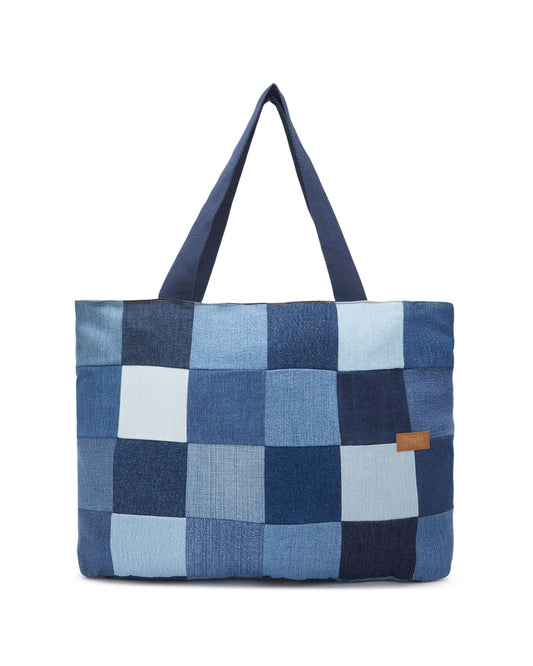
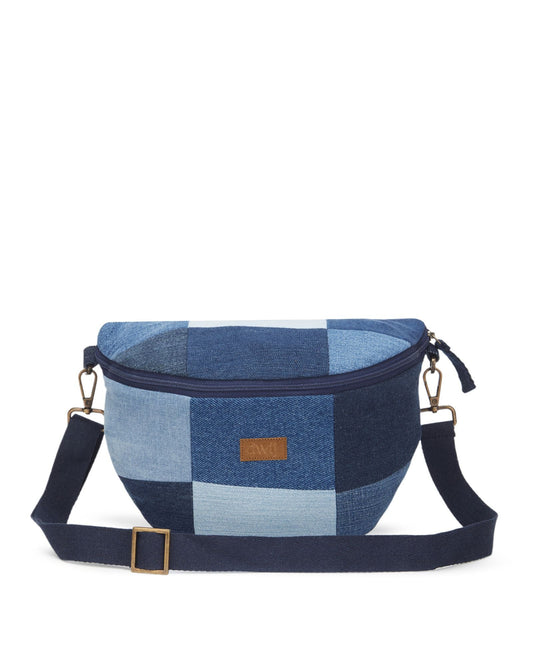
At dwij, we rescue these resources and transform them into durable bags, laptop sleeves, pouches, home décor, and utility accessories.
Giving these materials a purpose helps reduce unnecessary textile waste while extending the life of existing resources.
Materials, Embroidery & Finishing
We also pay attention to the small details that make our products last and stand out.
Our products use:
-
Premium quality YKK Japanese zippers and sliders
-
Rust-free, non-corrosive white metal fittings
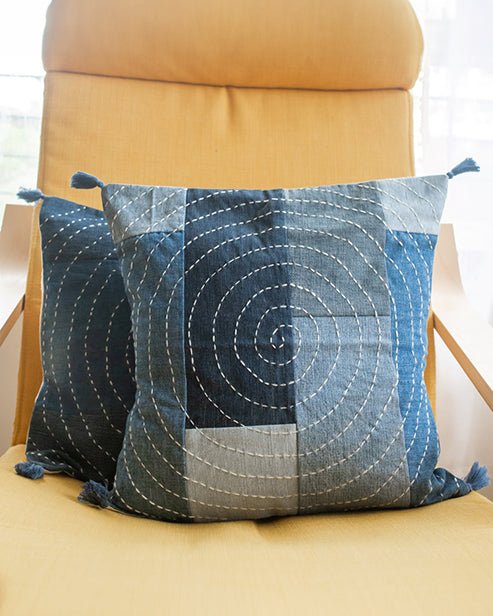
We also support artisans by adding handmade embroidery to our products. Over time, we have created:


These details add character while supporting craft and artisan livelihoods.
Why We Don't Buy Newly Produced Denim
Producing new denim requires significant amounts of:
-
Water
-
Energy
-
Raw cotton
-
Chemicals
Instead of increasing demand for virgin materials, our denim sourcing process focuses on extending the life of materials that already exist.
This supports a circular approach to fashion where products stay in use for longer rather than becoming waste after a single lifecycle.
For us, sustainability starts with the material itself.
Every Material Is Carefully Prepared
Before any denim reaches our workshop, it undergoes rigorous industrial pre-washing through our sourcing process to ensure it meets high hygiene standards.
Only after this preparation does the fabric arrive at the dwij workshop for design and production.
This ensures that every product is created from clean, carefully prepared materials while preserving the environmental benefits of upcycling.
Sorting Denim for Its Next Life
Once the denim reaches our workshop, every piece is individually assessed.
Rather than treating all fabric the same, we carefully sort materials based on factors such as:
-
Fabric weight
-
Thickness
-
Colour variations
-
Natural fading
-
Construction details
-
Usable fabric area
Because every rescued pair of jeans is different, every production batch is different too.
This means our design process begins with the materials available—not the other way around.
It's a creative approach that embraces variation instead of eliminating it.
Designing Around the Material
Traditional manufacturing often starts with a fixed design and orders fabric to match.
At dwij, we reverse that process.
We first understand the characteristics of the rescued denim, then thoughtfully design products that make the best possible use of each piece.
This approach helps us:
-
Maximise material utilisation
-
Reduce production waste
-
Preserve unique denim textures
-
Create products with authentic character
We also use denim scraps for patchwork wherever possible, so even small pieces find a purpose.
Instead of forcing uniformity, we allow every material to influence the final design.
That's why every dwij product has its own story.
More Than Upcycling, Designing for Circularity
Sourcing responsibly is only one part of our journey.
Dwij's philosophy is simple: we want waste to become wonder. We build with post-consumer jeans and post-industrial denim waste, and we respect the natural faded texture that time has already created. No chemicals are used to make artificial washed effects.
Our products are also designed with longevity in mind.
We follow a design for disassembly philosophy wherever possible, carefully considering how materials can eventually be separated for repair, recycling, or future upcycling.
Combined with durable construction and thoughtful craftsmanship, this approach helps products remain useful for years.
Because extending a product's life is one of the most effective ways to reduce its environmental impact.
Why Our Sourcing Process Matters
India generates around 7,800 kilotonnes of textile waste every year.
Much of it still ends up in landfills or is incinerated.
By rescuing post-consumer jeans and post-industrial denim, we help keep valuable materials in circulation while reducing demand for newly produced textiles.
This circular approach has helped dwij save 30,353 kilograms of CO₂ emissions which is sequestered carbon equivalent to 502 tree seedlings grown for 10 years, in just one financial year, FY2024-25.
Every rescued pair of jeans represents an opportunity to reduce waste and create something useful.
Every Batch Is Different And That's the Beauty of It
One of the most exciting aspects of post-consumer jeans sourcing is unpredictability.
The shades, textures, and fabric weights available change from batch to batch.
Rather than seeing this as a limitation, we embrace it.
It allows us to create products that are naturally unique, where every fade, seam, and stitch tells part of the material's previous story.
No artificial distress.
No chemical washes.
Just authentic denim, thoughtfully transformed.
Final Thoughts
At dwij, sourcing isn't simply the first step in production.
It's the foundation of everything we create.
By choosing post-consumer jeans and post-industrial denim over newly manufactured fabric, we're helping extend the life of existing materials while reducing textile waste.
Every bag, laptop sleeve, pouch, or accessory begins with a rescued piece of denim that deserved another chance.
That's what being "twice born" truly means.
Not making more.
Making better use of what already exists.
Frequently Asked Questions (FAQs)
1. Where does dwij source its denim?
dwij sources denim from two primary channels: post-consumer jeans and post-industrial denim waste. These rescued materials are transformed into durable everyday products instead of becoming textile waste.
2. What is post-consumer jeans sourcing?
Post-consumer jeans sourcing is the process of collecting previously worn denim garments from second-hand supply chains and giving them a second life through upcycling.
3. Why doesn't dwij use new denim?
Producing new denim requires significant water, energy, and raw materials. By using existing denim, dwij helps reduce textile waste and supports a more circular approach to fashion.
4. Is the upcycled denim hygienic?
Yes. Before reaching the dwij workshop, all rescued denim undergoes rigorous industrial pre-washing through our sourcing process to ensure it meets high hygiene standards.
5. Why are no two dwij products identical?
Every batch of rescued denim varies in colour, texture, fading, and construction. These natural differences make each handcrafted product unique.
6. What is post-industrial denim?
Post-industrial denim refers to surplus fabric, production offcuts, and manufacturing leftovers generated during textile and garment production that can still be repurposed into new products.
7. How does dwij's denim sourcing process support sustainability?
By rescuing post-consumer jeans and post-industrial denim instead of using newly produced fabric, dwij helps reduce textile waste, extend the life of existing materials, lower carbon emissions, and support circular fashion.