
Few pieces of clothing have travelled as far as a pair of blue jeans.
They began as practical work trousers built to withstand hard physical labour. They were worn by miners, labourers and workers who needed clothing that could survive repeated use.
Then they moved into Western films.
Then youth culture.
Then music.
Then protest movements.
And eventually, almost everywhere.
Today, a pair of jeans can belong to almost any wardrobe. They can be worn to an office, a college, an airport, a workshop or a dinner.
That transformation took more than a century.
The modern blue jean can be traced to May 20, 1873, when tailor Jacob Davis and San Francisco businessman Levi Strauss received a patent for copper-riveted work trousers. But the story of blue jeans begins even earlier with the history of denim, indigo and durable work fabrics.
Before Blue Jeans, There Was Denim
The words jeans and denim are often treated as though they describe the same thing.
They do not.
Denim is a fabric.
Jeans are a garment.
And both histories are older than the famous blue trousers associated with Levi Strauss.
The fabric itself has a complicated European history, with the words denim and jeans commonly linked to French and Italian places respectively. Historical evidence also suggests that blue work fabrics existed in Europe centuries before the American jeans industry emerged.
Indigo played another important role.
The deep blue colour that became characteristic of jeans was created using indigo dye. Indigo had a long history as a valuable dye before blue denim became an industrial garment fabric.
So when blue jeans appeared in nineteenth-century America, they were not creating the idea of blue cloth from nothing.
They were combining older textile knowledge with a new kind of workwear.
1873: The Rivet Changes the Trouser
In the early 1870s, Jacob Davis was a tailor in Reno, Nevada.
His customers included workers whose trousers were repeatedly damaged at points of stress, particularly around pockets and seams.
Davis developed a simple solution:
metal rivets.
The small pieces of copper reinforced areas that experienced repeated strain.
The idea worked.
Davis partnered with Levi Strauss, a San Francisco dry-goods merchant, and together they patented the riveted trousers in 1873. The original garments were marketed as “waist overalls” and were made in both denim and brown duck cloth.
The significance of the invention was not fashion.
It was durable.
The garment was designed around what workers actually needed from their clothes.
Something that could take punishment.
Something that could be repaired.
Something that could be worn repeatedly.
The blue jean's first identity was therefore not fashion.
It was a function.
The Workwear Years
During the late nineteenth century, riveted trousers became closely associated with the working life of the American West.
Miners wore them.
Cowboys wore them.
Other manual workers adopted durable denim trousers as practical clothing.
The clothing reflected the physical conditions of the people wearing it.
Dust.
Heat.
Long working days.
Heavy tools.
Repeated movement.
The jeans were not designed to look worn.
They became worn because they were being used.
That distinction would become important much later.
The faded lines, softened fabric and marks that once represented labour would eventually become desirable features of fashion.
The 501 and the Making of an Icon
In 1890, the Levi Strauss company began using the 501 designation for its best-known style.
The basic construction was remarkably durable and recognisable.
Over the following decades, details changed. But the essential idea remained: a straightforward pair of trousers made for everyday wear.
By the early twentieth century, jeans were still strongly associated with labour, but their audience was beginning to expand.
Smithsonian records that people outside blue-collar work were already wearing jeans by the 1930s.
That was the beginning of a much larger transformation.
From Workwear to the American West
The image of jeans began changing in the early twentieth century.
Western films played a significant role.
Cowboys on screen wore denim, helping transform work trousers into part of a larger image of the American West.
The garment was still associated with toughness and physical work.
But now it also represented something else:
the idea of the rugged individual.
Hollywood helped turn practical clothing into visual language.
You did not necessarily need to work on a ranch to wear jeans.
You could simply want to look like someone who did.
By the 1930s, Western-themed advertising was also helping sell jeans to customers beyond the traditional working population.
Jeans Enter Everyday Life
The next major shift came after the Second World War.
Denim began moving further away from its original workwear context and into ordinary urban life.
Young people adopted jeans.
Popular culture adopted jeans.
Movies helped establish new associations with them.
In the 1953 film The Wild One, Marlon Brando's character wore blue jeans with a leather jacket and boots, contributing to the garment's emerging association with youth rebellion.
The image was very different from that of a nineteenth-century miner.
But the garment was recognisably the same.
That was one of the unusual things about jeans.
They could absorb new meanings without losing their old ones.
The 1960s and 1970s: When Jeans Became a Statement
By the 1960s, jeans were no longer simply practical trousers.
They could communicate identity.
Young people wore them as part of a rejection of formal dress.
Activists wore them during political movements.
And denim became particularly significant within the American civil rights movement.
During the 1965 voting-rights demonstrations in Alabama, activists wore blue denim as a visual marker of solidarity. Smithsonian's history of denim describes how jeans could recall the clothing of agricultural labourers while also connecting wearers with contemporary working people.
This gave denim an unusual cultural position.
It was associated with labour.
But it could also challenge social hierarchies.
It could be casual.
But it could also be political.
It could belong to an individual.
And it could become a collective uniform.
The World's Most Recognisable Casual Garment
During the second half of the twentieth century, jeans moved steadily across borders.
American popular culture helped spread them internationally.
By the late 1970s and 1980s, denim had acquired particular symbolic value in countries where Western clothing was difficult to obtain.
Smithsonian documents how Levi's began large-scale sales behind the Iron Curtain in 1978, where jeans became associated with Western culture, status and freedom.
After the fall of the Berlin Wall, access expanded further.
The garment had travelled an extraordinary distance:
From mines and workshops
to Hollywood
to protest movements
to streets around the world.
Jeans Stop Belonging to One Group
One reason jeans survived so many cultural shifts is that they stopped belonging to one particular social group.
They were no longer only workers' trousers.
They were not exclusively men's clothing.
They were not exclusively American.
They were not limited to one age group.
Different communities adapted denim to their own styles.
Slim jeans.
Wide-leg jeans.
Bootcut.
Bell bottoms.
Straight-leg.
High-waisted.
Low-rise.
Distressed.
Patched.
Embroidered.
The garment kept changing while remaining recognisable.
Why Blue?
The colour itself became part of the identity.
Indigo-dyed warp yarns and lighter weft yarns create the characteristic visual contrast associated with denim. Over time, repeated wear can change the appearance of the fabric, creating areas of fading and variation.
That means two pairs of jeans made from similar fabric can eventually look very different.
The wearer becomes part of the visual history of the garment.
The crease behind the knee.
The fading around the pockets.
The softened waistband.
The worn edge.
The marks created by years of movement.
A pair of jeans can therefore carry a record of use in a way that few other everyday garments do.
When Wear Became Part of the Look
Originally, fading was evidence that jeans had been worn.
Later, it became something people wanted.
Manufacturers began reproducing worn-in appearances through different finishing processes.
Consumers could buy jeans that looked as though they already had a history.
This created an interesting reversal.
The marks that once happened naturally through labour became an aesthetic that could be deliberately manufactured.
Today, naturally faded denim and artificially distressed denim can look similar from a distance.
But their stories are completely different.
One comes from use.
The other is designed to imitate it.
Jeans Become Everyone's Uniform
By the twenty-first century, jeans had become one of the most recognisable garments in everyday clothing.
They could be dressed up or down.
They could be worn across generations.
They could move between workplaces, travel, leisure and social settings.
The original purpose, durable trousers for physical work was still visible in their construction and reputation.
But the garment had accumulated more meanings along the way.
Work.
Youth.
Rebellion.
Music.
Cinema.
Politics.
Casual culture.
Individual style.
That is how a work garment became something close to a global uniform.
But the History of Jeans Is Also a History of Labour
It is easy to tell the story of jeans through famous names, iconic films and cultural movements.
But denim's history is also a history of workers.
People who mined.
People who farmed.
People who built railroads.
People who manufactured fabric.
People who stitched garments.
People who repaired them.
People who wore them until the fabric changed.
That matters because the popularity of jeans was built on their relationship with physical work.
Their reputation for toughness came from being used in demanding conditions.
The garment's cultural history cannot really be separated from the labour that gave it meaning.
The Denim Story Doesn't End When Jeans Are Worn Out
Perhaps the most interesting part of the story is what happens after the first life of a pair of jeans.
A garment that was once made for durability eventually becomes worn.
The question then becomes:
What happens next?
Denim can be repaired, altered, reused, repurposed or transformed into something else.
That possibility brings the history of jeans into the present.
The material that once represented long-lasting workwear can become the material for another object entirely.
From Jeans to Dwij
This is where the history of denim connects naturally with dwij.

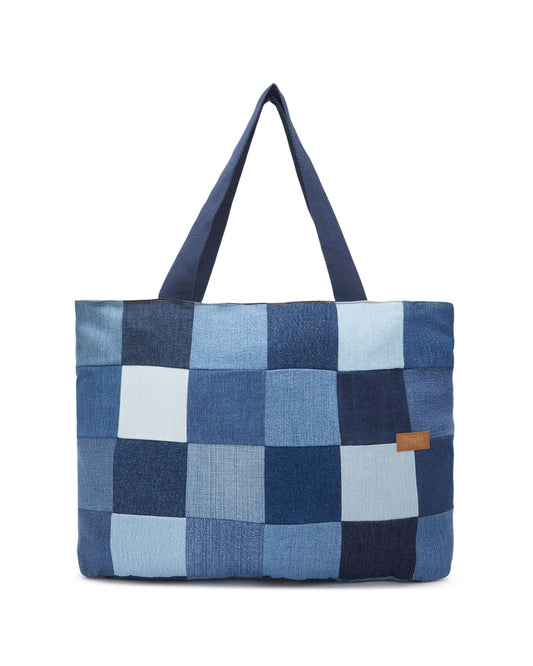
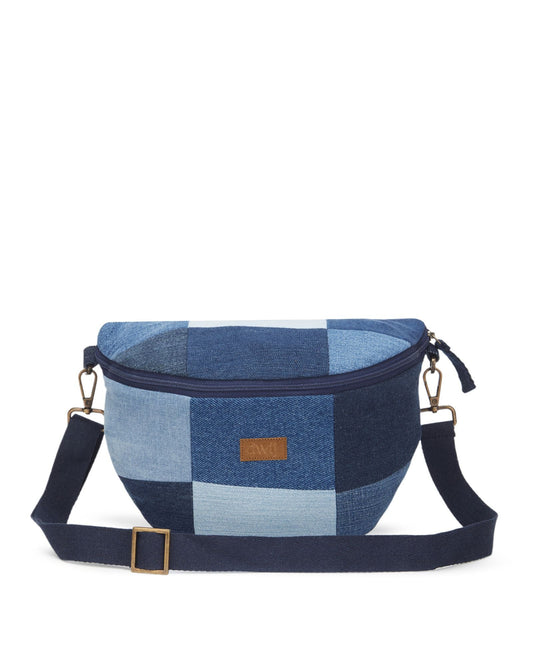
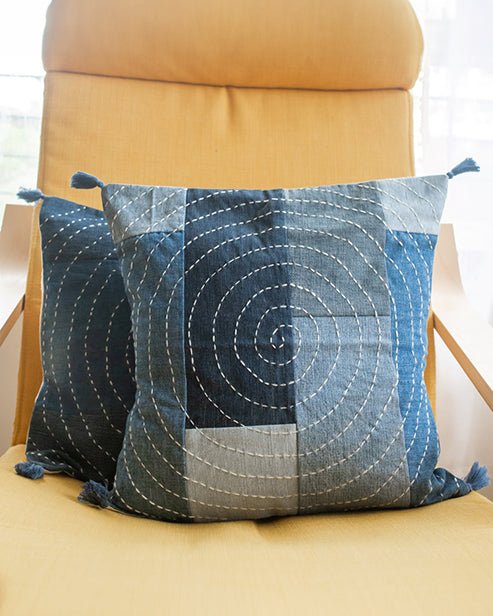
Dwij works with post-consumer jeans and post-industrial denim waste, using discarded denim as a material for new products rather than treating it as material with no further value.
The approach is not about recreating the original pair of jeans.
It is about recognising that the material still has value after its first intended use.
The fading remains.
The texture remains.
The traces of its previous life remain.
They become part of what the new object looks like.
This is particularly relevant to Dwij's approach because the brand does not artificially create faded effects to make new denim look old. The character of reclaimed denim comes from its previous life.
In that sense, an upcycled denim bag can carry forward part of the history that began with the original pair of jeans.
The garment has changed.
The material has changed form.
But its story has not completely disappeared.
Denim as Culture, Not Just Fabric
The history of blue jeans is often told as a simple success story:
workwear became fashionable.
But that is too simple.
Jeans became culturally powerful because different people repeatedly gave the garment new meanings.
Workers valued durability.
Cowboys became part of its popular image.
Hollywood gave it an attitude.
Young people turned it into a symbol of independence.
Activists used it as a visual statement.
Designers reinterpreted its silhouette.
And ordinary wearers made it personal through years of use.
That is why denim belongs to the category of culture, not simply clothing.
What Makes Jeans Still Relevant After 150 Years?
The answer may be partly hidden in the original design.
Jeans were never created to be precious.
They were created to be used.
They were expected to move.
To crease.
To fade.
To become softer.
To take on marks.
And to last.
That relationship with use is still one of the reasons denim feels familiar.
A new pair of jeans may look almost identical to millions of others.
An old pair rarely does.
The difference comes from time.
The Next Life of Denim
More than 150 years after the 1873 patent, blue jeans remain remarkably recognisable.
The cuts have changed.
The styling has changed.
The cultures surrounding them have changed.
But the fundamental material remains familiar.
And now the story is moving into another stage.
Instead of asking only how jeans became popular, we can also ask:
What happens to the denim after the jeans are finished?
That question shifts the focus from fashion history to material history.
And perhaps that is where the next chapter of denim begins.
FAQs
1. When were blue jeans invented?
The modern blue-jean story is generally traced to 1873, when Jacob Davis and Levi Strauss received a U.S. patent for copper-riveted work trousers. The original trousers were made in both denim and brown duck cloth.
2. Who invented blue jeans?
Jacob Davis developed the riveted trouser design, while Levi Strauss provided financial and business support. The two received the patent together in 1873.
3. Were jeans originally made for workers?
Yes. The early riveted trousers were designed for workers who needed durable clothing, particularly miners and other manual labourers. Their construction focused on strengthening areas that experienced repeated strain.
4. Why are jeans blue?
The characteristic blue colour comes from indigo dyeing. Indigo and blue textiles have histories that predate modern American jeans by centuries.
5. When did jeans become fashionable?
Jeans gradually moved beyond workwear during the twentieth century. They were increasingly worn by people outside blue-collar occupations by the 1930s, and their cultural significance expanded dramatically through Western films, youth culture and popular music in the following decades.
6. Why did jeans become associated with rebellion?
From the 1950s onward, popular culture increasingly associated jeans with youth, independence and nonconformity. Films such as The Wild One helped reinforce this image, while jeans later became associated with youth movements and political protest.
7. How did jeans become popular around the world?
American cinema, music and popular culture helped spread denim internationally. During the Cold War, jeans could also carry symbolic meanings associated with Western culture, particularly in places where they were difficult to obtain.
8. What is the difference between denim and jeans?
Denim is a fabric; jeans are a garment. Denim can be used for many products besides jeans, while jeans specifically refer to trousers traditionally made from denim or similar sturdy cotton fabric.
9. Why do old jeans fade differently?
Repeated movement, friction and washing can gradually change the appearance of denim. Areas exposed to more wear can become lighter, creating individual patterns of fading that reflect how the garment was used.
10. What can be done with old denim after jeans are no longer wearable?
Old denim can potentially be repaired, altered, reused, repurposed or upcycled into new products. At Dwij, discarded jeans and denim waste are transformed into upcycled denim products, extending the useful life of the material.
11. Where can I explore Dwij's denim products?
You can explore the dwij shop collection to see the brand's range of upcycled denim bags, accessories, home products and other pieces made using reclaimed materials.
150 Years Later, the Jeans Are Still Telling Stories
A pair of blue jeans has had many identities.
Workwear.
Western wear.
Youth uniform.
Political symbol.
Fashion staple.
Everyday clothing.
But perhaps its most interesting quality is that it has never stopped changing.
A pair of jeans can begin as a garment made for hard labour, spend years being worn and eventually become material for something completely different.
That makes denim's history longer than the life of any one pair.
The story started with work.
It travelled through culture.
And it continues with whatever comes next.