
Recycled PET felt is a durable, lightweight material made from post-consumer PET plastic bottles that are processed into textile-like felt sheets. At Dwij, recycled PET felt works alongside rescued post-consumer jeans and post-industrial denim to create bags that are structured, functional, and designed for long-term use. By combining these materials with durable YKK Japanese zippers and non-corrosive metal fittings, we can make thoughtful products while giving different forms of discarded material another useful life.
When we talk about upcycled products, denim is often the first material that comes to mind. At Dwij, rescued denim is central to our work, but it isn't the only material that helps us create our bags. Recycled PET felt plays an important supporting role, particularly where a bag needs additional structure, cushioning, or shape retention.
Understanding what PET felt is—and why we use it—helps explain how different materials can work together within a more circular approach to product design.
What Is PET Felt?
PET stands for polyethylene terephthalate, a type of plastic commonly used to make beverage bottles and other packaging.
Recycled PET felt is made by recovering post-consumer PET bottles and processing them into a textile-like material. The bottles are washed, shredded into smaller flakes, processed into fibres, and then formed into felt sheets.
Unlike conventional woven fabric, felt is created by bonding fibres together rather than using a traditional yarn-and-weave construction.
The resulting material is lightweight, flexible, and durable, which makes it useful for products that require additional structure without adding unnecessary weight.
For Dwij, its value comes from giving an existing waste material another practical application.
How Recycled PET Felt Is Used in Dwij Bags
A bag needs more than an attractive exterior. It also needs to hold its shape, protect what you carry, and withstand regular use.
This is where recycled PET felt can complement our rescued denim.
Depending on the product design, felt can provide:
-
Structure: Helps a bag maintain its shape.
-
Cushioning: Adds an additional layer of protection around everyday belongings.
-
Lightweight support: Provides rigidity without making the product unnecessarily heavy.
-
Shape retention: Helps certain sections remain stable during regular use.
The denim provides the distinctive exterior character, while recycled PET felt can provide functional support within the construction.
This combination allows us to use different materials for different purposes instead of relying on a single material throughout a product.
The Materials Behind a Dwij Bag
A Dwij bag isn't defined by one material alone. Its construction can bring together several carefully selected components, each serving a specific purpose.
|
Material |
Origin |
Role in Dwij Bags |
|
Post-consumer jeans |
Rescued jeans collected before disposal |
Primary outer material |
|
Post-industrial denim |
Denim and fabric scraps from production |
Helps reduce pre-consumer textile waste |
|
Recycled PET felt |
Recovered post-consumer PET bottles |
Structure, cushioning and support |
|
YKK Japanese zippers |
Durable premium fittings |
Reliable opening and closure |
|
Non-corrosive metal fittings |
Durable hardware |
Functional support and longevity |
This is an important part of our approach at Dwij: sustainability isn't simply about choosing one material and calling a product sustainable. It is about considering where materials come from, how they are used, how long the product can remain useful, and what can happen at the end of its first life.
Post-Consumer Denim: Giving Old Jeans Another Life
Our connection with denim begins with post-consumer jeans.
These are jeans that have already been used by consumers and are collected through collection drives and second-hand markets before they become waste.
Instead of treating these garments as something that has reached the end of its value, we look at what they can become next.
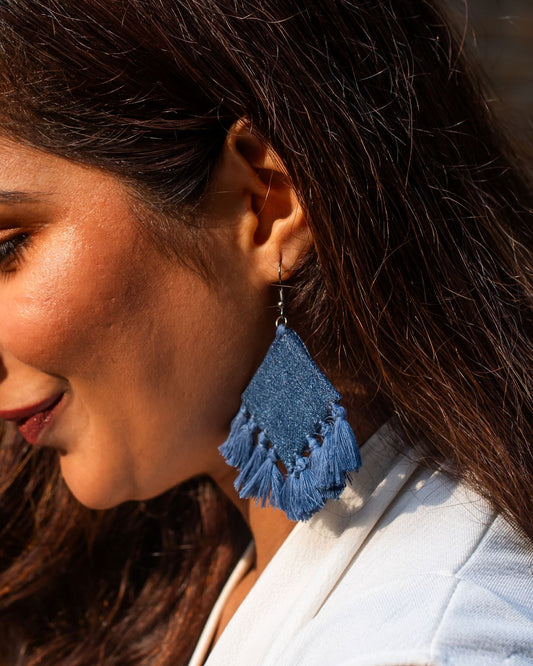
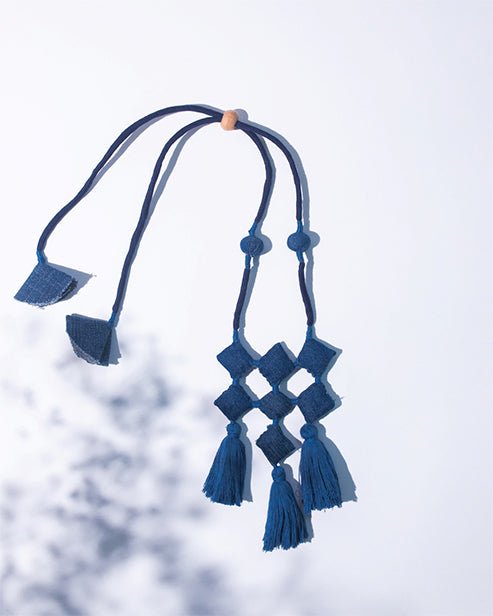
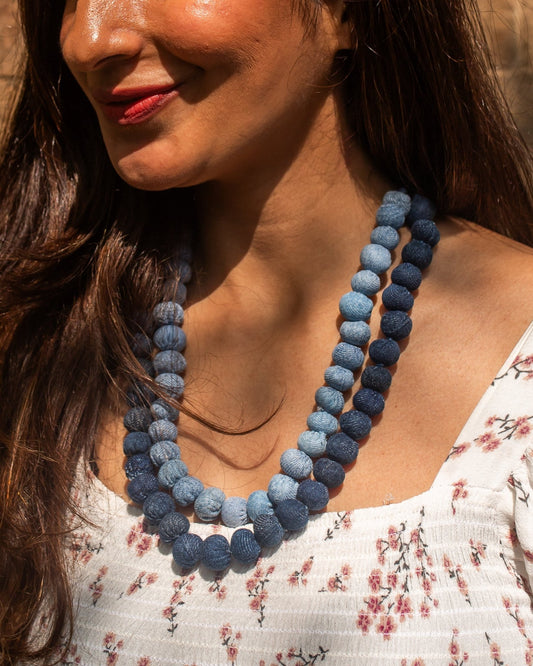
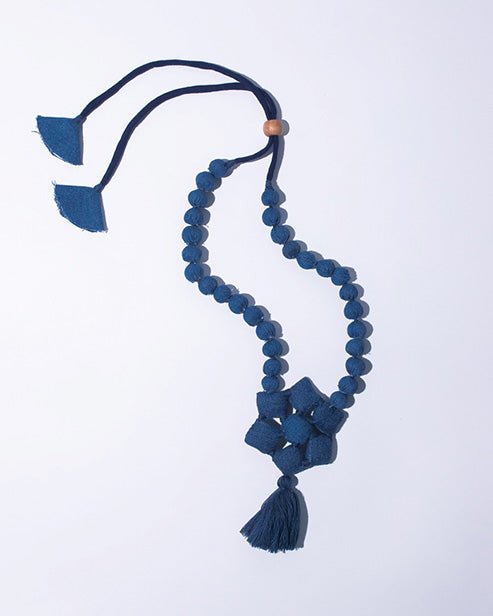
The denim is carefully prepared before being transformed into bags, pouches, accessories, jewellery, and other products.
Every pair of jeans carries its own fading, stitching, texture, and history. We don't want to erase those characteristics. They are part of what makes each Dwij product unique.
Post-Industrial Denim: Using Production Scraps
Our material story also includes post-industrial denim.
During textile and garment production, fabric scraps can be left behind. These scraps may be too small or irregular for their original production purpose, but that doesn't mean they have no value.
At Dwij, we use post-industrial denim and other fabric scraps wherever appropriate, helping keep useful material in circulation.
This supports our zero-waste approach, where we look for ways to use as much of the material as possible rather than discarding smaller pieces.
Why Combine Denim and Recycled PET Felt?
Different materials have different strengths.
Denim brings durability, texture, character, and a recognisable everyday aesthetic. Recycled PET felt can add structure and cushioning. Durable zippers and metal fittings support the functionality of the finished product.
Together, these components allow us to design products around function rather than material uniformity.
For example, a laptop or everyday utility bag may need a stronger internal structure than a simple fabric tote. Recycled PET felt can help provide that support while allowing rescued denim to remain an important part of the product's identity.
This is one way we apply our broader philosophy of thoughtful design: use the material where it makes the most sense.
Is Recycled PET Felt Sustainable?
Recycled PET felt has an important sustainability advantage because it gives post-consumer plastic another application instead of relying entirely on virgin material.
By converting recovered PET bottles into a useful textile material, it can help divert plastic waste from disposal and keep an existing resource in use.
However, we believe sustainability should be discussed with nuance.
Recycled PET is still a synthetic material. It should not automatically be described as having zero environmental impact. Its value lies in using recovered material for a useful purpose and designing products to remain in use for longer.
That distinction matters to us at Dwij.
We don't believe one material solves the entire waste problem. We believe better choices come from understanding materials and using them thoughtfully.
Designed for Longevity
Material selection is only one part of creating a responsible product.
The way a product is constructed matters too.
At Dwij, we focus on durability and longevity, using premium YKK zippers and non-corrosive metal hardware alongside rescued textiles. Our design-for-disassembly philosophy also considers what happens when a product eventually reaches the end of its first useful life.
The objective isn't to create something that is simply attractive today.
It is to create something that can remain useful for as long as possible.
From Discarded Materials to Everyday Utility
The idea behind Dwij is captured in our name: Dwij means "twice born."
A discarded pair of jeans can become the outer material of a bag. A post-industrial denim scrap can become part of another product. A recovered PET bottle can become recycled felt that provides structure inside a bag.
These materials don't have to follow their original purpose forever.
Through thoughtful design, they can become something useful again.
That is what we mean by "From Waste to Wonder – Upcycled with Purpose."
Final Thoughts
So, what is PET felt? It is a textile-like material created from recovered PET plastic, including post-consumer bottles, and processed into durable felt sheets.
At Dwij, recycled PET felt is one part of a broader material story. We combine it with rescued post-consumer jeans, post-industrial denim scraps, durable YKK Japanese zippers, and non-corrosive metal fittings to create functional bags designed for everyday use.
For us, sustainability isn't about finding a perfect material. It is about recognising value in materials that already exist, using them thoughtfully, and designing products that can remain useful for longer.
Every Dwij bag is therefore more than a combination of fabrics and hardware. It represents our belief that discarded materials can have another chapter—and that thoughtful design can help write it.
Frequently Asked Questions
1. What is PET felt?
PET felt is a textile-like material made by processing PET plastic, including recovered post-consumer plastic bottles, into fibres and forming them into felt sheets. It is lightweight, durable, and useful for adding structure and cushioning to products.
2. Is recycled PET felt made from plastic bottles?
Yes. Recycled PET felt can be produced from recovered polyethylene terephthalate (PET) plastic bottles. The bottles are processed into fibres and then formed into felt material.
3. Why does Dwij use recycled PET felt in its bags?
Dwij uses recycled PET felt where it can provide useful structural support, cushioning, and shape retention. It complements rescued denim and allows different materials to perform different functions within a bag.
4. What other materials does Dwij use in its bags?
Dwij bags can combine rescued post-consumer jeans, post-industrial denim and fabric scraps, recycled PET felt, durable YKK Japanese zippers, and non-corrosive metal fittings, depending on the product design.
5. Is recycled PET felt better than virgin synthetic material?
Recycled PET felt gives recovered PET material another useful application and can reduce reliance on virgin synthetic material. At Dwij, we view it as one component of thoughtful material selection rather than claiming that any single material is completely impact-free.