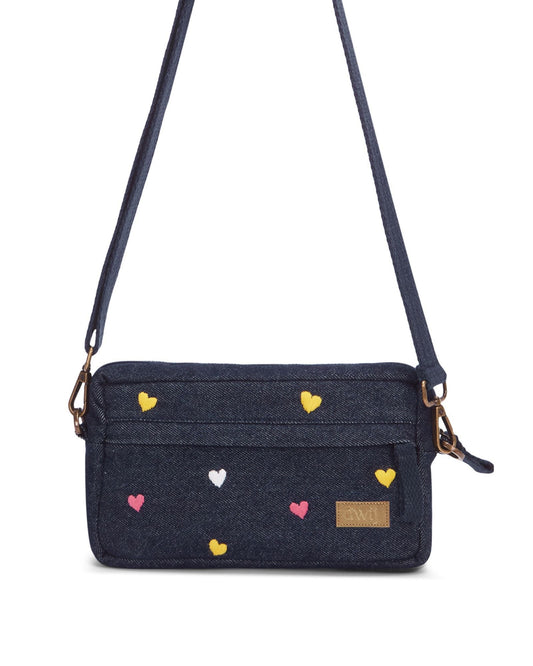

Indian embroidery is rarely just about making fabric look beautiful.
Look closely at a traditional embroidered textile and you may notice something else: colour is often carrying a story.
A bright red thread may speak of celebration. Yellow may evoke sunlight, fertility or auspicious beginnings. Green can bring associations with nature and new life, while white can suggest purity, peace or simplicity. But there is an important detail: these meanings are not universal.
Across India, colour symbolism changes with region, community, occasion and even the purpose of the textile.
That is what makes Indian folk embroidery so fascinating. The same colour can tell a slightly different story when it moves from Punjab to Gujarat, Bengal to Karnataka.
So, what do the colours in Indian folk embroidery actually mean?
Let’s look beyond the colour palette and into the stories stitched into it.
Red: Celebration, Love and Life
Red is one of the most visually striking colours in Indian textiles, and its presence is rarely accidental.
Across many Indian traditions, red is associated with love, celebration, energy, fertility and auspicious occasions. It appears frequently in wedding textiles, festive clothing and ceremonial pieces.
In Phulkari, the traditional embroidery of Punjab, bright threads are used to create floral and geometric patterns over cloth. Red-based textiles can have a particularly celebratory presence, especially in pieces associated with weddings and important life events.
But red is not simply a "wedding colour."
Its deeper significance comes from its association with life, vitality and emotional intensity. This helps explain why it has remained so prominent across generations of Indian textile traditions.
Yellow: Sunlight, Prosperity and Auspicious Beginnings
There is something naturally warm about yellow.
It brings to mind sunlight, turmeric, flowers and the changing seasons, which is why it has long held an important place in Indian cultural traditions.
In many communities, yellow and turmeric are connected with auspiciousness, prosperity and new beginnings. This relationship also appears in textiles and embroidery associated with celebrations.
Yellow can feel joyful without being as intense as red. In embroidery, it often adds brightness to floral motifs, geometric patterns and nature-inspired compositions.
And because Indian embroidery is closely connected with everyday life, these associations with sunlight, harvests and celebration often find their way into the threads themselves.
Green: Nature, Growth and Renewal
Green is perhaps one of the easiest colours to connect with nature.
Leaves, vines, fields and new growth make green a natural choice for embroidery inspired by the landscape.
In many Indian textile traditions, green can evoke growth, fertility, freshness and renewal. It also works beautifully alongside the reds, yellows, pinks and blues commonly found in folk embroidery.
Look at a heavily embroidered textile and green may not always be the dominant colour. Instead, it can quietly create the feeling of a garden, field or landscape among the other motifs.
This is particularly interesting because many traditional embroidery designs don't attempt to reproduce nature literally. A flower may become a geometric shape. A leaf may become a repeated motif.
The colour helps us recognise the idea even when the form has been stylised.
Blue: The Sky, Water and the Everyday
Blue occupies a fascinating place in Indian textile traditions.
Depending on the region and context, it can bring associations with the sky, water, spirituality and everyday life. It also has a strong visual relationship with indigo, one of the historically important natural dyes of South Asia.
In Bengal, for example, embroidered textiles can include blue threads alongside softer or more muted shades, creating a very different visual language from the intensely colourful compositions found elsewhere.
Blue also demonstrates why colour cannot always be interpreted through symbolism alone.
Sometimes a colour is there because it was available, practical, locally produced or visually effective.
The story behind an embroidered textile is therefore not just cultural. It can also be economic, geographical and material.
White: Simplicity, Purity and Space
White embroidery can look deceptively simple.
Take Chikankari, for instance. The delicate white-on-white embroidery associated with Lucknow creates beauty through texture, shadow and subtle differences rather than bold colour contrasts.
White is often associated with purity, simplicity and peace in Indian cultural contexts, although its meaning can change considerably depending on the occasion and community.
What makes white embroidery especially interesting is the way it asks us to look closer.
Instead of relying on bright colours to attract attention, the stitches themselves become the visual language: raised textures, fine patterns, floral forms and negative space.
Sometimes, the absence of colour can say just as much as colour itself.
Pink: Softness, Joy and Celebration
Pink brings a softer energy to many Indian textile palettes.
It can be associated with affection, joy, femininity and celebration, particularly when used alongside reds, oranges and yellows.
But traditional embroidery rarely treats colour in isolation.
A pink thread beside a deep red can feel completely different from the same pink placed against green or indigo. Embroiderers often build visual richness by layering colours rather than assigning one fixed meaning to each shade.
This is one reason Indian folk embroidery can feel so alive.
The story is created not just by which colours are used, but by how they interact.
Orange: Energy, Warmth and the Sacred
Orange sits between the warmth of red and the brightness of yellow.
In Indian cultural contexts, shades of saffron and orange can carry associations with spirituality, sacrifice, energy and sacred traditions. At the same time, brighter orange shades also appear simply because they create warmth and vibrancy within a textile.
This dual character makes orange particularly interesting.
A colour can carry cultural significance while simultaneously functioning as a design element.
That overlap between meaning and visual beauty is a recurring feature of Indian embroidery.
Black: Contrast, Protection and Visual Strength
Black often plays a different role from brighter colours.
Rather than filling an entire embroidered surface, it may appear as an outline, border or contrasting element that makes neighbouring colours stand out.
In different Indian cultural contexts, black has been associated with protection, warding off negative influences and absorbing or countering unwanted attention.
But again, context matters.
In embroidery, black can also simply be a powerful design tool. Place black beside yellow, pink or red and suddenly every neighbouring colour becomes more intense.
It gives folk embroidery some of its characteristic visual definition.
When Colours Meet, They Tell a Bigger Story
Perhaps the most important thing to remember is that Indian folk embroidery does not have a universal colour dictionary.
Red does not always mean love.
White does not always mean purity.
Green does not always mean nature.
Meaning depends on region, community, occasion, material, tradition and personal interpretation.
And this is exactly what makes these textiles so compelling.
Consider a piece of colourful Kutch embroidery. Its vivid palette, mirrors, geometric forms and intricate stitches create a visual language that cannot be reduced to the meaning of individual colours.
Or look at a Kantha textile from Bengal. The story may emerge through the combination of running stitches, reused fabric, motifs and colour, rather than through one symbolic shade.
The embroidery becomes a complete composition.
Colour Was Also Shaped by What Was Available
There is another part of the colour story that is easy to overlook: materials and availability.
Before modern synthetic dyes became widespread, textile colours depended heavily on locally available natural materials, dyeing knowledge and trade networks.
Indigo could produce blues.
Turmeric could create yellow tones.
Madder and other plant-based sources could contribute red shades.
The exact colour achieved depended on the material, process and dyeing conditions.
This means that the colours we admire in historical textiles are also records of local knowledge and material culture.
A colour was not simply selected from a palette.
Someone had to know how to produce it.
Why Folk Embroidery Still Feels So Modern
Walk into a contemporary Indian fashion or home décor space and you will still find many of these colours.
Why?
Because the visual language of Indian embroidery has an unusual ability to move between generations.
Traditional motifs can appear on contemporary silhouettes.
Old stitching techniques can be used on new materials.

A familiar colour combination can suddenly look completely different when placed on a modern bag, accessory or home textile.
The craft survives not by remaining frozen in time, but by continuing to be used, adapted and interpreted.
That is particularly true of embroidery traditions passed down through communities and artisan families.
From Textile Heritage to Everyday Objects
At Dwij, this relationship between craft heritage and everyday use is something we find especially meaningful.
Our work with upcycled denim gives discarded textile material another purpose, while traditional techniques such as Kantha embroidery bring the skill and visual language of Indian craft into contemporary everyday objects.

You may see these details across our bags and accessories, home décor, and other pieces in the Dwij collection where craft is not treated simply as decoration, but as part of an object's story.
Because perhaps the most meaningful way to keep a craft tradition alive is not only to preserve it in a museum or archive.
It is to keep making, using and living with it.
FAQs: Colours in Indian Folk Embroidery
1. What do colours mean in Indian embroidery?
Colours in Indian embroidery can carry cultural, religious, seasonal or emotional associations, but their meanings vary by region, community and occasion. There is no single colour symbolism system that applies to every Indian embroidery tradition.
2. What does red represent in Indian embroidery?
Red is often associated with celebration, love, vitality, fertility and auspicious occasions. It is particularly prominent in several festive and wedding-related textile traditions.
3. Why is yellow important in Indian textiles?
Yellow is commonly connected with sunlight, turmeric, prosperity, auspiciousness and new beginnings. Its significance can vary depending on the cultural context.
4. What does green symbolise in Indian crafts?
Green is often associated with nature, growth, fertility and renewal. It is also widely used as a visual colour in floral and nature-inspired embroidery.
5. Why is white embroidery so popular in Chikankari?
White-on-white Chikankari allows the embroidery stitches and textures themselves to become the focus. The subtle contrast creates an understated and intricate visual effect.
6. Does every Indian folk embroidery style use the same colours?
No. Different regions and communities have developed distinct colour palettes influenced by local traditions, materials, availability, cultural practices and aesthetic preferences.
7. What is the most colourful Indian embroidery?
Several Indian embroidery traditions are known for vibrant colour combinations, including Phulkari, Kutch embroidery and other regional folk embroidery styles. However, it is difficult to identify one tradition as universally "the most colourful" because colour intensity and style vary considerably between communities and individual pieces.
8. How are traditional Indian embroidery colours made?
Historically, many textile colours were produced using natural dyes derived from plants, minerals and other natural materials. Later, synthetic dyes became increasingly common and expanded the range of available colours.
9. Is Kantha embroidery colourful?
Kantha can be colourful, but its appearance varies significantly. Traditional Kantha often involves stitching together layers of old or discarded textiles, so its colour palette can depend on the fabrics available to the maker.
10. Why are colours important in Indian folk art?
Colours contribute both visual beauty and cultural meaning. In folk art, they can communicate associations with celebration, nature, spirituality, everyday life and regional identity while also helping create distinctive artistic styles.
Final Thought
Indian folk embroidery reminds us that colour is never just colour.
It can carry memory, geography, celebration, craftsmanship and generations of knowledge.
And sometimes, the most beautiful part is not knowing exactly what every colour means but knowing that someone, somewhere, has been giving meaning to those colours for generations.