
You know that pair.
The one sitting at the back of your wardrobe.
The jeans you haven't worn in years, but somehow can't bring yourself to throw away.
Maybe they're too faded now.
Maybe they don't fit anymore.
Maybe the knees are worn out, the pockets are stretched, or the denim has become softer than any new pair could ever be.

And yet, every time you clean your wardrobe, you put them back.
Why?
Because they're not just jeans anymore.
They're the jeans you wore on your first college trip.
The ones you wore on countless weekend outings.
The pair that travelled with you.
The pair that somehow became part of your everyday life.
And that is precisely why your oldest pair of jeans may be worth more than you think.
Your Jeans Have Been Keeping a Record
Look closely at an old pair of jeans and you'll notice something you probably didn't notice when you first bought them.
The faded knees.
The lighter patch near the pocket.
The crease that always forms in the same place.
The softened waistband.
The subtle marks left by years of movement.
These aren't random imperfections.
They're a record of how the jeans were lived in.
Your jeans changed because you changed them.
Every time you sat down, walked, travelled, cycled, carried your phone, kept your wallet in the same pocket, or simply wore them through another ordinary day, you left something behind.
That's what makes naturally worn denim so personal.
No factory can manufacture your exact history.
Why Old Denim Feels Different
New jeans can be comfortable.
But old jeans often feel familiar.

They have already adapted to your body.
The fabric has softened.
The stiffness has disappeared.
The colour has changed.
The denim has developed character.
This is one reason vintage and naturally faded denim can be so appealing. The material doesn't look perfectly uniform anymore and that's exactly what makes it interesting.
At dwij, we see these changes differently.
We don't see faded denim as something that needs to be corrected.
We see authentic characters.
The natural fading, texture, variation, and visible wear are part of what makes rescued denim worth preserving.
The Problem With Calling Old Jeans "Waste"
When we say something is waste, we tend to stop seeing its possibilities.
An old pair of jeans becomes:
"I don't need this anymore."
Then:
"It's too worn out."
And finally:
"I'll throw it away."
But the material hasn't necessarily stopped being useful.
The jeans may no longer work as jeans.
That doesn't mean the denim has reached the end of its life.
The fabric can still have strength.
The pockets can still be useful.
The seams can still contain character.
The faded sections can still become beautiful design elements.
The question isn't always "Can I wear these jeans again?"
Sometimes the better question is:
"What else can these jeans become?"
Your Old Jeans Already Have the Best Part: A Story
Think about what makes your oldest pair different from a new piece of fabric.
It has a history.

The faded patch isn't just a colour change.
It may remind you of a particular period of your life.
The worn pocket might be where you always kept your keys.
The crease near the knee might have formed during years of commuting.
The tiny mark on the thigh might remind you of a trip you took years ago.
You may not remember every moment.
But the material carries traces of them.
That makes old denim different from a blank piece of fabric.
It doesn't begin with an empty page.
It begins with a story.
This Is Where Upcycling Becomes More Than Recycling
Recycling generally focuses on processing a material so it can become raw material again.
Upcycling can take a different approach.
Instead of reducing the material back to a basic fibre, we can sometimes preserve what makes the original material interesting and redesign it into something with a new purpose.
For denim, that can mean preserving its colour variation, pockets, seams, labels, stitching, and naturally developed fades.
The material doesn't have to forget what it was.
It can carry parts of its first life into its second.
At dwij, We Don't Want Your Jeans to Forget Their First Life
This idea is at the heart of dwij.
The name द्वि ज (dwij) means "twice born" in Sanskrit.
It represents the belief that materials can have another meaningful life through thoughtful design and craftsmanship.
At dwij, post-consumer jeans and post-industrial denim are rescued and transformed into upcycled bags, accessories, home goods, and other everyday products.
But we don't want reclaimed denim to look like it has never been used.
That's the point.
The fade is part of the story.
The texture is part of the story.
The variation is part of the story.
We preserve the authentic character of the material rather than chemically creating artificial washed effects.
One Pair of Jeans Can Become Something Completely Different
Imagine the jeans you've kept for years.
Now imagine that the strongest parts of that denim become something you can continue using.
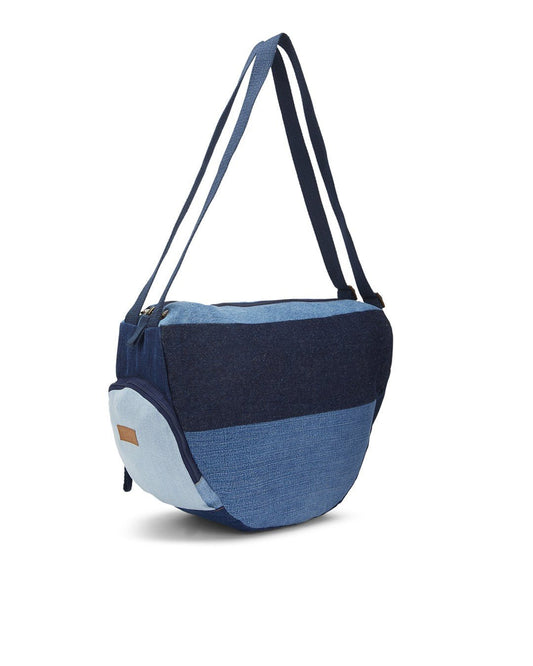
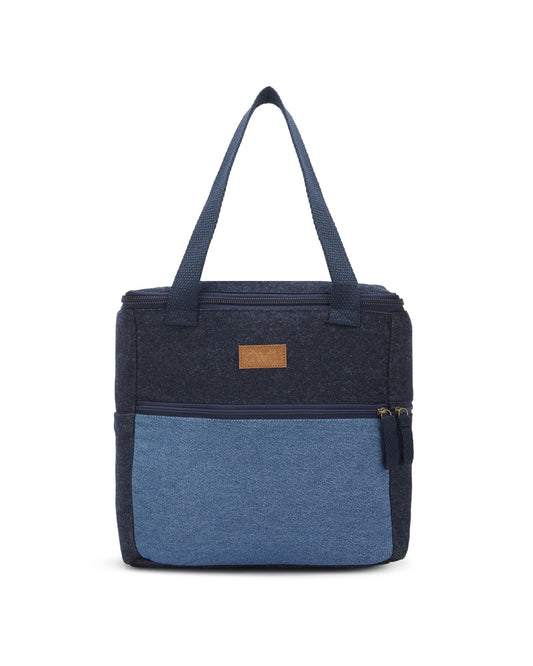
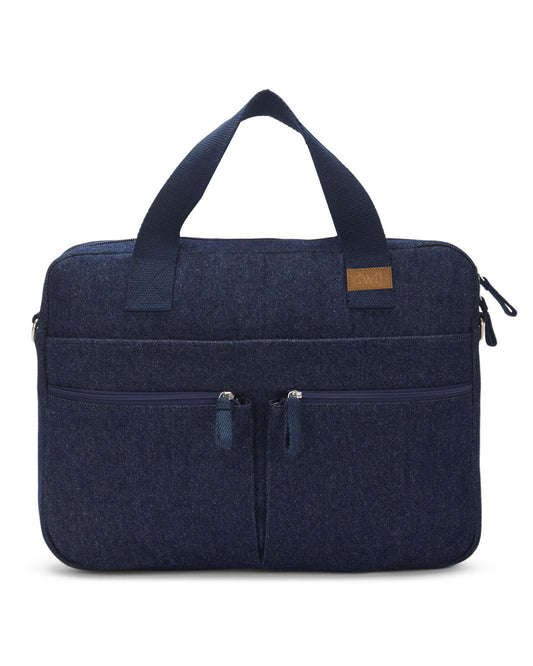
A panel could become part of a denim tote bag.
A pocket could become a useful feature on a denim backpack.
Smaller pieces could become part of patchwork.
A beautifully faded section could become the most distinctive part of a handcrafted denim bag.

The material has changed form.
But something from its first life remains visible.
That's what makes upcycled denim so compelling.
The Fade You Once Thought Was a Flaw Can Become the Best Part
Fashion often teaches us to want things that look new.
Perfectly even colour.
Perfectly smooth surfaces.
No marks.
No variation.
But denim has always had a different relationship with time.
Its fades are part of its appeal.
At dwij, naturally faded and worn denim isn't something we try to hide. We don't chemically recreate a "perfect" wash to make rescued denim look newer.
We let the material speak for itself.
That means one upcycled denim product may have a deep indigo panel while another carries years-old faded blues.
One may have a visible seam.
Another may feature an old pocket.
These differences aren't manufacturing mistakes.
They're evidence of where the material has been.
What Happens When Your Jeans Get a Second Life?
They don't become the same thing again.
And they don't need to.

Your old jeans may no longer be able to accompany you as clothing.
But their denim can continue its journey as something useful.
It might become a tote, a sling bag, a backpack, a pouch, a home accessory, or another handcrafted product.
And suddenly, something you thought had reached the end of its useful life becomes part of someone else's everyday life.
That's the beautiful thing about a second life.
It doesn't have to repeat the first one.
The People Behind the Transformation
Material alone doesn't create a product.
People do.
At dwij, skilled makers work through processes including sourcing, sorting, washing, cutting, stitching, and ironing to transform rescued denim into finished products.
Every stage involves decisions.
Which section should be saved?
Where should a cut be made?
Which pieces can work together?
How can smaller pieces be used?
How should the final product be finished?
This is why upcycling isn't simply about having old material.
It's about having the creativity and skill to see what that material could become.
Our "I Made Your Bag" campaign exists to make those makers visible, because a handcrafted product should not have an anonymous story.
So, What Should You Do With Your Oldest Pair of Jeans?
Before you put them in the bin, pause.
Look at them.
Look at the fading.
Look at the pockets.
Look at the seams.
Look at the places where the denim has softened.
Ask yourself what the jeans have already given you and what they might still have left to give.
You could repair them.
You could repurpose them.
You could turn them into something yourself.
Or you could pass them on through a textile take-back or reuse programme where available.
The important thing is to stop thinking of the material as worthless simply because its first purpose has ended.
Because Some Things Are Too Full of Memories to Throw Away
Your oldest pair of jeans may not be your most fashionable pair anymore.
It may not even fit.

It may have more faded patches than blue.
But perhaps that's exactly why you still have it.
It has lived with you.
And the marks it carries are proof.
At dwij, we believe materials deserve that same respect.
We don't start with a blank piece of fabric.
We start with something that has already lived.
Then, through thoughtful design and skilled hands, we give it another chapter.
Because a pair of jeans doesn't become worthless when you stop wearing it.
Sometimes, that's when its most interesting story begins.
Frequently Asked Questions
Why do people keep their oldest pair of jeans?
People often keep old jeans because they are comfortable, familiar, and connected to memories. Years of wear can also give denim unique fading, softness, and texture that cannot be replicated exactly in a new garment.
Can old jeans be reused after they can no longer be worn?
Yes. Denim that is no longer suitable as clothing can potentially be repaired, repurposed, donated, or upcycled into products such as denim bags, accessories, and home goods, depending on its condition.
What can old jeans be upcycled into?
Old jeans can be transformed into many useful products, including tote bags, backpacks, sling bags, pouches, accessories, home décor, and other textile products.
Is faded denim still useful?
Absolutely. Fading can give denim unique colour variation and character. At dwij, natural fading and signs of wear are valued as part of the material's authentic history rather than treated as flaws.
Does dwij use old jeans to make new products?
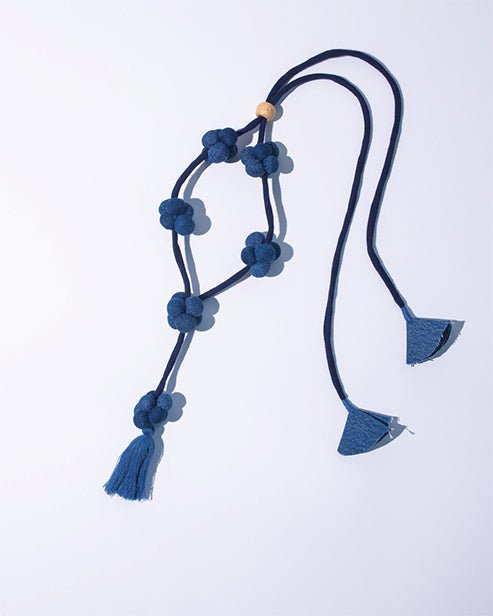
Yes. dwij works with post-consumer jeans and post-industrial denim and textile waste and transforms them into handcrafted products including bags, accessories, jewellery, home goods, and more.
Does dwij chemically fade its rescued denim?
No. dwij's philosophy is to preserve the authentic character of reclaimed denim rather than use chemicals to create artificial washed effects. Natural texture, fading, and wear are part of the material's identity.
Why are dwij products different from one another?
Because reclaimed denim comes with different colours, fades, textures, seams, and histories. These variations remain visible in the finished products, making each handcrafted piece naturally individual.
What does dwij mean?
dwij (द्वि ज) means "twice born" in Sanskrit. It reflects the brand's philosophy of giving discarded materials another meaningful life through thoughtful design and craftsmanship.
Where can I find dwij's upcycled products?
You can explore the dwij collection to find upcycled denim bags, accessories, home goods, jewellery, and other products created from rescued textile materials.