
There is a question we hear often in a world used to next-day delivery:
“Can you make it faster?”
Sometimes the answer is yes.
Sometimes, it has to be no.
At Dwij, saying no to a fast-turnaround request is not about refusing a customer or avoiding growth. It is about being honest about what our production process requires and protecting the quality, craftsmanship, and thought that go into every product we make.
This is something I have had to learn as a founder: not every timeline is a timeline we should agree to.
Why Does Handmade Production Take Time?
The simplest answer to why handmade takes time is that the product is being made through a sequence of human-led processes rather than simply pulled from ready-made inventory.

At Dwij, we work with post-consumer jeans and post-industrial denim waste. The material itself is not uniform.
Before it becomes a bag, it needs to go through several stages.
Sourcing → washing through sourcing partners → sorting → marking and cutting → stitching → finishing → artisan quality checks → packaging and shipping.
Each stage matters.
The denim needs to be sorted by characteristics such as size, GSM, shade, and usability. The right pieces then need to be selected for a particular design. Once cutting begins, the pieces need to come together accurately. Stitching, finishing, hardware, and final checks follow.
And when embroidery is involved, there is another layer of handwork.
That is what people are really asking for when they ask for a handmade product.
They are not only asking for the finished object.
They are asking for the time required to make it.
The Fast-Turnaround Request Is Not Always a Simple Request
From the outside, a request for “just 50 bags by next week” can sound like a straightforward production question.
Inside a small manufacturing setup, it can mean something very different.

It can require us to ask:
-
Do we have enough suitable denim available?
-
Does the required material need to be sorted again?
-
Are enough artisans available for the work?
-
Does the design involve embroidery or other handwork?
-
Can cutting and stitching be completed without rushing?
-
Will finishing and quality checks still receive adequate time?
-
Can packaging and dispatch happen within the requested window?
The answer cannot simply be based on how quickly a single bag can be stitched.
Production time is the sum of many smaller processes.
What Happens When You Try to Compress Every Step?
This is where my thinking as a founder has changed.
Earlier, a request for a shorter timeline could feel like something we should simply try to accommodate.
But production is not a spreadsheet where reducing the number of days automatically produces the same result.

If several stages are compressed at once, the pressure moves somewhere.
It may affect planning.
It may affect artisan workload.
It may affect material selection.
It may reduce the buffer available for corrections.
Or it may leave less time for the final quality check.
For us, that is not a trade-off I want to make casually.
Handmade Does Not Mean “Slow for the Sake of Being Slow”
I also want to make an important distinction.
Handmade production is not valuable simply because it takes longer.
Time alone does not make a product better.
The point is that certain steps genuinely require time, attention, skill, or human judgement.
At Dwij, we work with recovered denim, so material selection is part of the process. Our products are designed around the material available to us rather than treating every piece of denim as an identical blank sheet.
When embroidery is involved, the maker's hand becomes an even more visible part of the process.

And when the product reaches finishing and quality control, we need time to notice the small things.
That is the kind of time I want us to protect.
The Material Itself Sets Some of the Pace
There is another reason Dwij cannot approach production exactly like a conventional mass-produced product.
Our raw material has already had a life.
A pair of discarded jeans does not arrive as a perfectly uniform roll of fabric.
It may have:
-
Different shades of denim
-
Natural fading
-
Different fabric weights
-
Existing seams
-
Pockets
-
Worn sections
-
Different usable areas
After sourcing and washing through our sourcing partners, the material is brought to the studio and sorted.
Only then can we begin determining which pieces work for which designs.

That means the founder's reflection on production time is also a reflection on material reality.
We cannot always control exactly what the next batch of recovered denim will look like.
We can control how thoughtfully we work with it.
What We Protect When We Say No
When I say no to an unrealistic turnaround, I am protecting more than a delivery date.
I am protecting the process.
That includes:
Material selection
Choosing suitable pieces of denim rather than using whatever happens to be immediately available.
Craftsmanship
Giving stitching, embroidery, finishing, and construction the attention they require.
Artisan workload
Avoiding the assumption that handmade work can simply be accelerated indefinitely.
Quality control
Keeping enough time for the finished products to be checked before they leave the studio.
Honest communication
Giving customers a timeline we believe we can actually deliver rather than promising an attractive date and struggling to meet it later.
This Matters Even More for Custom and Bulk Orders
The conversation becomes particularly important when we receive corporate gifting, wedding gifting, or other bulk requests.

A bulk order is not simply a larger version of a single order.
It introduces additional planning.
There may be material requirements, product combinations, customisation, embroidery, packaging, and multiple quality checks to coordinate.
Products such as Denim Pouches, Mobile Slings, Bottle Holders, and Laptop Sleeves can be considered for gifting, but the production timeline depends on the specific order and requirements.
That is why we prefer to discuss bulk requirements early.
The earlier we understand the quantity, product selection, customisation, and required delivery window, the more realistically we can assess what is possible.
Saying No Can Be Part of Good Customer Service
This may sound counterintuitive.
But I have come to believe that sometimes saying “we cannot promise that timeline” is more responsible than saying “we'll try.”

A customer deserves to know what is realistically possible.
If we accept a deadline simply because we do not want to lose an order, we create expectations that the entire production team then has to carry.
If we say no when the timeline genuinely does not work, we give the customer an honest choice:
Can we work with a different date?
That conversation may not always result in an order.
And that is okay.
What I Have Learned as a Founder
The lesson has not been that fast orders are always bad.
Some orders can absolutely be completed within shorter timelines depending on stock, quantity, design, and production capacity.
The lesson is more specific:
Do not promise speed at the expense of the process that makes the product worth ordering in the first place.
As a founder, there is always pressure to say yes.
Yes to the bigger order.
Yes to the shorter deadline.
Yes to the last-minute request.
Yes to the expectation that everything can be made immediately.

But building a responsible production system also means knowing when a yes would put too much pressure on the people, materials, and processes behind the product.
Why This Matters to Dwij
Dwij exists around the idea of giving materials another life.
But upcycling is not simply about taking an old pair of jeans and turning it into a bag.
It involves sourcing, sorting, designing, cutting, stitching, finishing, checking, and making decisions about what each piece of recovered material can become.

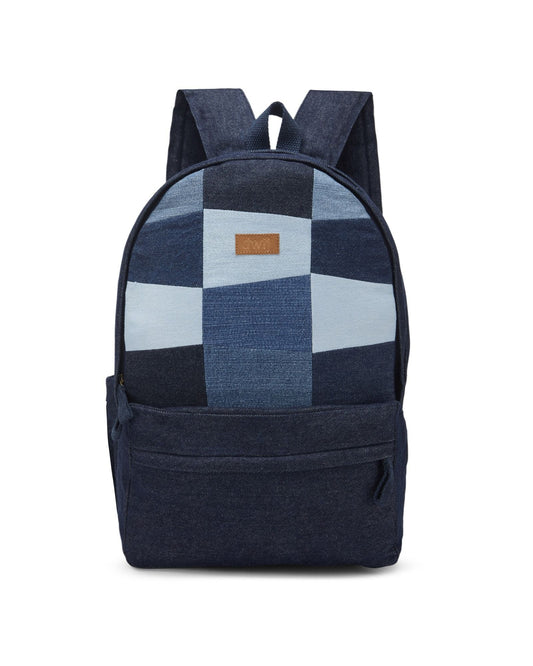
Our Convertible Totes, Backpacks, Tote Bags, and Baguette may look like finished products on a shelf.
Behind each one is a chain of decisions and human work.
That chain is part of the product.
And I don't want to shorten it simply to make a promise that sounds convenient.
Sometimes, “Not Yet” Is the More Honest Answer
We live in a culture where speed has become a measure of service.
Fast shipping.
Fast production.
Fast turnaround.
Fast everything.
But handmade work asks us to think about another measure:
Was enough care given to make this well?
For Dwij, that question matters.
So when we say no to a turnaround that our process cannot realistically support, it is not because we do not value the order.

It is because we value the product, the people making it, and the trust behind the order enough to be honest about the time required.
Sometimes, the most responsible answer a founder can give is not “yes, we can do it faster.”
It is:
“Here is the time we genuinely need to do it right.”
Frequently Asked Questions
Why does handmade production take longer than mass production?
Handmade production often involves more human-led steps, including material selection, cutting, stitching, embroidery, finishing, and quality checks. The exact timeline varies by product, quantity, customisation, and production capacity.
Why does Dwij sometimes say no to fast-turnaround requests?
Dwij may decline or renegotiate a turnaround when the requested timeline does not allow enough time for material preparation, production, finishing, quality checks, or other required steps. The goal is to give customers a realistic commitment rather than promise a deadline the team may not be able to meet.
Does a longer production time always mean better quality?
No. Time by itself does not guarantee quality. What matters is whether the production process has enough time for the necessary material selection, craftsmanship, finishing, and quality checks.
Does Dwij accept bulk and corporate gifting orders?
Yes. Dwij works on corporate and wedding gifting requirements. The feasible timeline depends on factors such as quantity, product selection, customisation, material availability, and production capacity.
Which Dwij products can be considered for bulk gifting?
Depending on the requirement, options can include Denim Pouches, Mobile Slings, Bottle Holders, Laptop Sleeves, and other Dwij products. The appropriate product and timeline depend on the specific order.
Why does upcycled denim require material selection before production?
Recovered denim can vary in shade, weight, fading, seams, pockets, and usable areas. Dwij sorts the material before production so that suitable pieces can be matched to the requirements of a particular design.
What is the most important lesson behind saying no to fast turnaround?
For Dwij, the lesson is that production speed should be considered alongside craftsmanship, material availability, artisan workload, quality control, and honest customer communication. A realistic timeline helps protect the entire process behind the finished product.