
There is a place in northern India where clothing from wardrobes, factories and markets can begin an entirely different journey.
In Panipat, Haryana, textile waste is sorted, processed, shredded, spun and transformed into new forms of material. What arrives as unwanted clothing can leave as recycled fibre, yarn, blankets, rugs, wipers and other textile products.
The scale is difficult to imagine.
Bales of used textiles.
Mountains of fabric in sorting yards.
Machines pulling apart old fibres.
Workers separating materials by colour, composition and quality.
Panipat is often described as one of India's major textile recycling centres. But behind that description is a much more interesting story:
What actually happens to discarded clothing when it reaches Panipat?
A City Built Around Textiles
Panipat has been an important textile-producing centre for decades.
The city's textile ecosystem includes manufacturing, weaving, dyeing, processing, home textiles and recycling. This combination has created a network where materials can move between different stages of textile production.
That matters because textile recycling rarely happens through one machine or one factory.
It is an ecosystem.
A garment may enter through one channel, be sorted by another business, processed somewhere else and eventually become raw material for a completely different product.
This interconnected system is one of the reasons Panipat has become so closely associated with textile recycling in India.
What Happens When Discarded Clothing Arrives?
The first step is often sorting.
And sorting is far more complicated than simply separating "good clothes" from "bad clothes."
Textiles can differ by:
-
fibre type
-
colour
-
fabric construction
-
thickness
-
condition
-
size
-
blends
-
intended recycling route
Cotton, denim, wool, polyester and blended fabrics do not necessarily follow the same recycling pathway.
A sorting worker therefore has to make decisions that can determine what happens to a material next.
Some textiles can be reused.
Others may be suitable for mechanical recycling.
Some may be converted into lower-grade textile products.
And some materials are difficult to recycle because of their fibre blends, finishes or construction.
The pile of clothing may look like one enormous collection of discarded fabric.
To the people processing it, it is a collection of different materials with different possibilities.
The Sound of Textile Recycling
Once textiles are sorted, some materials move towards mechanical recycling.
The process can involve cutting, tearing and shredding fabric until it is broken down into fibres.
It is an industrial transformation that looks almost opposite to how clothing is normally made.
Garment manufacturing begins with fibres becoming yarn, yarn becoming fabric and fabric becoming clothing.
Textile recycling can work in the other direction:
garment → fabric → smaller pieces → fibre
The recovered fibres can then potentially be used to create new textile products.
The exact quality and possible application depend on the original material and the recycling process.
This is why not every old garment becomes another garment.
Sometimes, its second life takes a completely different form.
Why Colour Matters More Than You Think
Walk through a textile-sorting facility and one detail becomes immediately visible:
colour can become a sorting category.
When similar colours are processed together, the resulting recycled fibres may require less additional colouring than fibres that are mixed across many shades.
This can make colour sorting an important part of some mechanical recycling processes.
Imagine a bale filled mostly with faded blue denim.
It already carries a colour story.
Instead of treating every piece as an entirely blank material, the existing colour can become part of the recycled material's next identity.
This is one of the quiet but fascinating aspects of textile recycling:
the history of a garment can remain visible even after the garment itself is gone.
From Old Clothing to New Material
After shredding and fibre recovery, the material can enter another stage of textile production.
Depending on its properties, recovered textile fibres may be used for products such as:
-
recycled yarn
-
blankets
-
rugs
-
mats
-
cleaning materials
-
insulation and filling
-
other textile applications
This is an important distinction when talking about textile recycling.
Recycling does not always mean turning an old T-shirt into a new T-shirt.
In mechanical recycling, fibres can become shorter and weaker as they are processed. That can limit how they are used afterwards.
As a result, recycled textiles often move into products where the recovered fibre's characteristics make sense.
The material has not necessarily disappeared.
Its role has changed.
And Then There Is Denim
Denim is particularly interesting because it is a material many people encounter every day.
A pair of jeans can remain in someone's wardrobe for years. Eventually, however, it may become worn, damaged, outgrown or simply unwanted.
At the recycling stage, denim can be separated and mechanically processed to recover textile fibre.
But denim is not always made from 100% cotton.
Stretch jeans, coatings, trims, labels, stitching and blended fibres can complicate recycling.
That is why what happens before recycling matters too.
The design and construction of a garment can influence what happens at the end of its useful life.
This idea, thinking about an object's next stage before it is even made, is at the heart of design for disassembly and circular design.
The People Behind the Material Flow
It is easy to photograph piles of textiles.
It is harder to capture the people who make sense of them.
Sorting, grading, separating and processing textile materials require experience. Workers develop an understanding of fabric types, quality, colour and usability through repeated handling.
The recycling system is therefore not simply a story about machines.
It is also a story about human material knowledge.
Every bale that gets sorted represents thousands of small decisions.
Which material belongs where?
What can still be reused?
What can be recycled?
Which fibres should be kept separate?
Which materials have limited recovery options?
These decisions are part of what allows discarded textiles to move back into productive use.
Why Panipat Matters to India's Textile Story
Panipat offers a useful way to understand something much bigger than one city.
India's textile system does not end when a garment leaves a wardrobe.
There are people, businesses and processing networks that continue to work with textile materials after their first use.
Some materials are reused.
Some are recycled.
Some are transformed into different products.
And some remain difficult to recover.
Panipat sits within this larger network as an important textile-processing and recycling centre.
It shows us that the journey of a textile can be much longer than the journey of the garment we originally bought.
But Recycling Is Not the Same as Circularity
This distinction is important.
Seeing textile waste being recycled does not mean that every textile has entered a perfectly circular system.
There are still challenges.
Blended fabrics can be difficult to separate.
Synthetic fibres behave differently from natural fibres.
Mechanical recycling can shorten fibres.
Contamination can reduce material quality.
And recycling itself requires energy, infrastructure and labour.
That is why circular fashion involves more than simply recycling at the end.
It also asks different questions at the beginning:
Can a product last longer?
Can it be repaired?
Can its components be separated?
Can its materials be recovered?
Can the next use of the material be considered while designing the product?
The most useful lesson from places like Panipat may therefore be that the end of one textile's life is also part of the design story.
From Panipat to a Second Life
At Dwij, this idea becomes personal through the materials we work with.
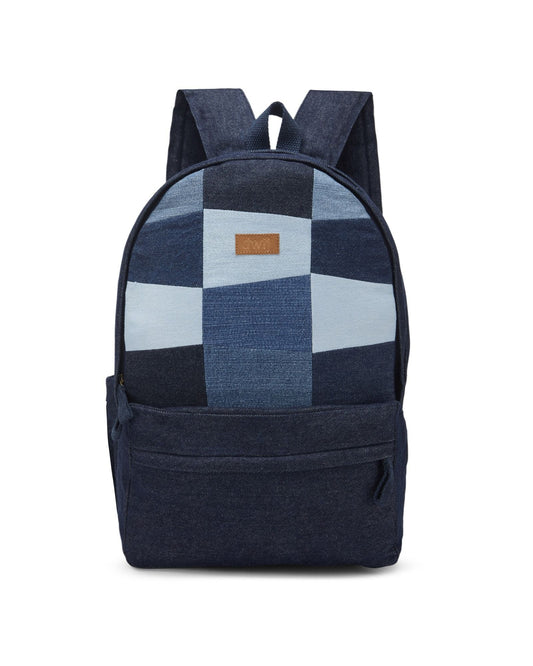
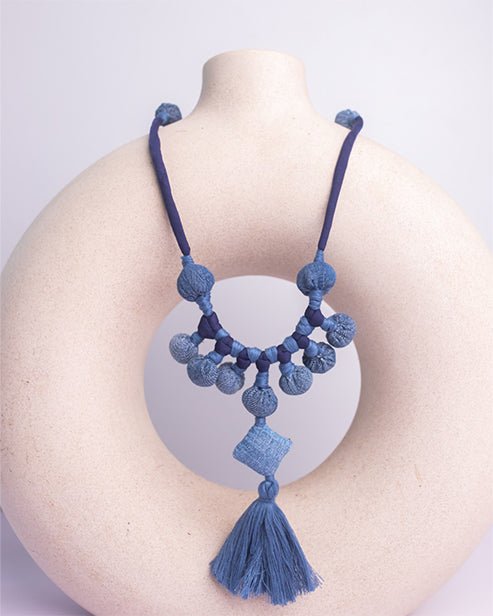
We use post-consumer jeans and post-industrial denim waste sourced through textile-waste channels, including informal markets and mill rejects.
The denim is externally washed, sorted by size, GSM and shade, then marked, cut and stitched into new products.
Instead of asking only what a piece of denim was, we ask:
What can it become next?

That might mean a denim bag, a backpack, a tote bag, a sling bag, or another everyday object designed to stay useful for longer.
Our approach also considers what happens after the product's next chapter. Wherever possible, we avoid construction choices that make future disassembly and material recovery unnecessarily difficult.
Because a textile's story doesn't have to end when its first purpose does.
Sometimes, it simply needs a different beginning.
FAQs About Panipat's Textile Recycling Industry
1. Why is Panipat famous for textile recycling?
Panipat has a large and established textile ecosystem that includes textile manufacturing, processing and recycling. Its recycling network handles substantial volumes of used and discarded textiles and converts many of these materials into recycled fibres and other textile products.
2. What happens to discarded clothes in Panipat?
Discarded textiles can be sorted according to material, colour, condition and other characteristics. Depending on the textile, they may be reused, shredded into fibres or directed toward different recycling and processing applications.
3. Does Panipat recycle old clothes?
Yes. Panipat is widely associated with textile recycling, including the mechanical processing of used and discarded textiles into recovered fibres and other textile materials.
4. Can old jeans be recycled?
Yes, depending on their fibre composition and condition. Denim can be mechanically processed to recover textile fibres, although stretch fibres, blends, trims and other components can affect the recycling process.
5. What are recycled textile fibres used for?
Recovered textile fibres can be used in products such as yarns, blankets, rugs, mats, filling materials and other textile applications. The final use depends on the fibre quality and processing method.
6. Is textile recycling the same as textile upcycling?
No. Textile recycling generally involves processing a textile back into fibre or another raw material. Upcycling gives an existing material a new use or higher-value application without necessarily breaking it down into its constituent fibres.
For example, turning an old pair of jeans into a new bag is generally considered upcycling, while shredding denim into fibre for use in another textile product is recycling.
7. Why is sorting important in textile recycling?
Sorting helps separate materials according to characteristics such as fibre type, colour, quality and composition. This can determine which recycling or reuse pathway is technically suitable for a textile.
8. Can all clothing be recycled?
No. The recyclability of clothing depends on factors including fibre composition, blends, trims, coatings, contamination and available recycling technology. Some textiles are considerably easier to recover than others.
9. What is the difference between textile waste and discarded clothing?
Discarded clothing refers specifically to garments that are no longer wanted or used. Textile waste is broader and can include discarded garments as well as fabric scraps, production offcuts, damaged textiles and other textile materials.
10. What does Panipat tell us about textile waste in India?
Panipat demonstrates that textile materials continue to have value beyond their first use. Its recycling ecosystem shows how discarded textiles can move through sorting, processing and manufacturing networks to become new materials and products.