
India's textile heritage is not one story.
It is thousands of stories stitched across regions, communities, generations, and individual hands.
A flower embroidered across a shawl in Punjab does not speak the same visual language as the delicate whitework of Lucknow. The geometric stitches of Karnataka look completely different from the running stitches of Bengal. Yet all of them share something important: they turn fabric into a record of skill, culture, memory, and time.
From Phulkari embroidery in Punjab to Kantha embroidery in Bengal, India's embroidery traditions are as diverse as the places they come from.
Some began as everyday household crafts. Some became associated with special occasions. Some were embroidered on garments, while others appeared on quilts, shawls, sarees, and household textiles.
And while each tradition has its own vocabulary of stitches, motifs, colours, and stories, together they remind us of something easy to overlook in an age of mass production:
Handmade things carry the presence of the person who made them.
Here is a visual map of nine embroidery traditions that continue to shape India's textile heritage.
1. Phulkari — Punjab
The name Phulkari literally translates to "flower work," and floral imagery is central to the tradition.
Originating in the Punjab region, Phulkari is known for its vibrant silk embroidery worked on cotton fabric. Traditionally, the embroidery was created on the reverse side of the fabric using a darning stitch, allowing the motifs to appear on the front.
The result is a distinctive surface filled with geometric interpretations of flowers, leaves, plants, and everyday life.
Phulkari was historically closely connected with women's lives in Punjab. Embroidered textiles could mark important occasions and were often made within families, with skills and patterns passed from one generation to another.
What makes Phulkari particularly striking is its ability to create complex imagery from relatively simple repeated stitches.
The embroidery isn't simply decoration.
It is a memory made visible.
2. Chikankari — Lucknow, Uttar Pradesh
Few Indian embroidery traditions are as immediately recognizable as Chikankari.
Associated with Lucknow, Chikankari is known for delicate hand embroidery, traditionally worked in white thread on light fabrics.
Its beauty lies in subtlety.
Instead of relying on bold colour contrasts, Chikankari creates texture through different stitches, including floral and foliage-inspired motifs.
The work can appear almost weightless from a distance. Look closer, however, and the fabric reveals an intricate network of stitches.
That contrast, quiet from afar, detailed up close is part of what makes Chikankari so distinctive.
Today, Chikankari appears across garments and contemporary fashion, but its identity remains rooted in the skill of the hand.
3. Kantha — Bengal
If there is one Indian embroidery tradition that has a particularly strong connection with textile reuse, it is Kantha.

Traditionally associated with Bengal, Kantha developed around the practice of layering old sarees and other worn textiles and securing them with rows of running stitches.
The stitches strengthened the layers while also creating decorative patterns.
This practical beginning gave Kantha a unique character.
Old fabric wasn't necessarily the end of a textile's story.
It could become a quilt, wrap, cover, or another useful object.
Over time, artisans developed increasingly elaborate compositions featuring flowers, animals, figures, geometric forms, and scenes from everyday life.
Kantha demonstrates how utility and beauty don't have to be separate.
A textile can be repaired and decorated at the same time.
It can carry the traces of its previous life while becoming something new.
That idea has particular relevance today, when designers are once again exploring textile reuse and circular design.
4. Kasuti — Karnataka
From the northern Karnataka region comes Kasuti, an embroidery tradition recognized for its intricate geometric patterns and highly precise stitching.
Kasuti is traditionally worked by counting the threads of the fabric rather than drawing designs directly onto its surface.
This requires remarkable attention to detail.
Traditional motifs can include temples, chariots, birds, flowers, animals, and geometric forms.
The embroidery often appears almost architectural because of its careful use of lines and repeated patterns.
Kasuti is a reminder that embroidery can be both expressive and mathematical.
A single misplaced stitch can change the rhythm of an entire design.
5. Kutch Embroidery — Gujarat
The Kutch region of Gujarat is home to a remarkable variety of embroidery traditions.
Kutch embroidery is known for its vivid colours, intricate stitches, geometric compositions, and, in several styles, the use of mirrors.

Different communities in the region have developed their own distinctive embroidery languages.
The result is not one uniform style but a rich family of techniques and visual traditions.
Geometric patterns, flowers, animals, borders, and abstract forms can come together in highly detailed compositions.
The embroidery often feels energetic and dense, with colour and texture working together to transform the surface of the textile.
6. Toda Embroidery — Tamil Nadu
In the Nilgiri Hills of Tamil Nadu, the Toda community has preserved a distinctive form of embroidery known for its bold geometric patterns.
Toda embroidery is traditionally worked on a white or off-white textile using red and black thread.
The patterns are created through counted-thread techniques, producing strong geometric compositions that can resemble architectural forms.
The embroidery is closely connected to Toda cultural identity and traditional clothing.
Its restrained palette makes the geometry even more powerful.
Instead of relying on many colours, the tradition demonstrates how much visual expression can come from line, repetition, and contrast.
7. Sujani — Bihar
Sujani embroidery comes from Bihar and has a particularly compelling relationship with reused textiles.
Traditionally, layers of old cotton sarees and dhotis were stitched together to create quilts. Running stitches secured the layers while also creating decorative surfaces.
Over time, Sujani became a form of narrative embroidery.
Artisans created scenes inspired by village life, nature, mythology, family, and social themes.
Like Kantha, Sujani shows that textile reuse can exist alongside sophisticated craftsmanship.
The old material isn't hidden.
Its layered history becomes part of the object.
8. Aari — Rajasthan and Other Regions
Aari embroidery is distinguished by the use of a hooked needle, known as an aari, to create chain stitches.
The technique allows skilled artisans to work quickly while producing intricate floral and decorative patterns.
Aari work has been practiced in several parts of India and is particularly associated with elaborate surface embroidery.
The hook-and-thread technique creates a characteristic chain-stitch texture.
With experienced hands, an aari needle can move across fabric almost rhythmically, building complex patterns stitch by stitch.
9. Zardozi — North India
Unlike the restrained palette of Toda embroidery or the reused layers of Kantha, Zardozi embroidery is known for richness.
The tradition uses metallic threads and embellishments to create elaborate surface designs.
Historically associated with royal and ceremonial textiles, Zardozi has long been used to create richly decorated garments, accessories, and furnishings.
Its visual language is built around shine, texture, and dimensionality.
Metallic threads, beads, sequins, and other embellishments can be combined to create ornate floral and decorative motifs.
Zardozi demonstrates another side of India's embroidery heritage: embroidery isn't only about thread and cloth.
It can transform a textile into something almost jewel-like.
Nine Traditions, Nine Visual Languages
Place these traditions side by side and the diversity becomes immediately visible.
Phulkari brings vibrant floral geometry.
Chikankari brings delicate whitework.
Kantha brings layered textiles and running stitches.
Kasuti brings counted-thread precision.
Kutch embroidery brings colour, geometry, and mirrors.
Toda embroidery brings bold red-and-black geometry.
Sujani brings recycled textiles and narrative storytelling.
Aari brings flowing chain stitches.
Zardozi brings metallic richness.
They are different traditions, from different regions, shaped by different communities.
Yet they share one essential ingredient:
human hands.
What India's Embroidery Traditions Can Teach Us About Making
The value of these traditions goes beyond the finished textile.
They show us that making something by hand changes our relationship with the material.
When a textile takes hours or days to create, it becomes difficult to think of it as disposable.

When a person can be named for the work they have done, the product becomes connected to a maker rather than an anonymous production line.
And when old fabric can become something useful again, its first life doesn't have to be its last.
These are ideas that feel remarkably relevant today.
The Connection to dwij: When Craft Gives Materials a Second Life
At dwij, we work with a similar belief: materials don't necessarily become worthless when their first use is over.
Our name, द्वि ज (dwij), means "twice born" in Sanskrit. It reflects our belief in giving materials a meaningful second life through design and craftsmanship.
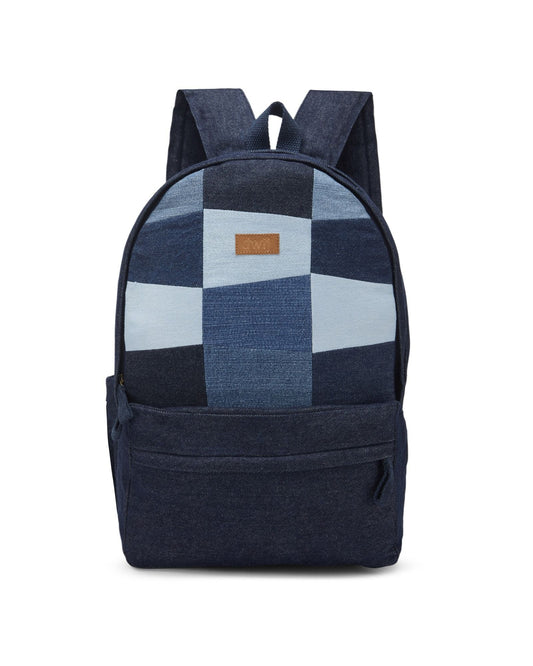
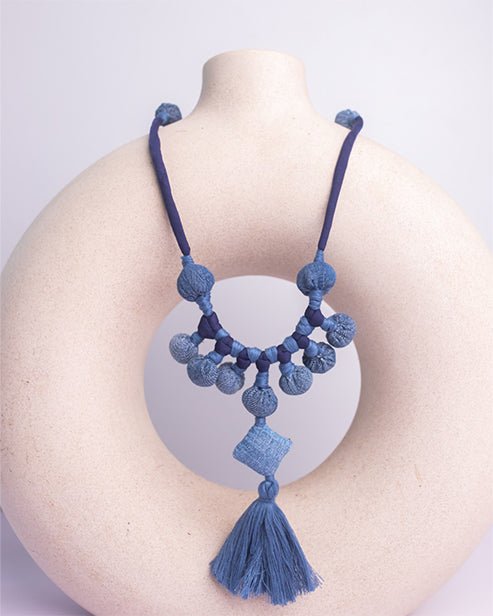
We rescue post-consumer jeans and post-industrial denim and transform them into handcrafted bags, accessories, jewellery, home goods, and more.
But material reuse is only one part of the story.
Hand embroidery and other handcrafted details are also part of how we celebrate the value of the maker.

From Kantha embroidery and hand-embroidered details to patchwork created from smaller denim pieces, the work of the hand remains visible in our products.
This is important to us because craft shouldn't disappear behind the finished product.
You should be able to see the stitch.
The variation.
The texture.
The time.
The person who made it.
Our hand-embroidered collection brings this idea into contemporary everyday products, combining reclaimed materials with techniques rooted in India's rich craft vocabulary.
The goal isn't to reproduce traditional textiles exactly.
It is to respect the idea behind them: that materials, skills, and stories can continue to have value when we choose to make thoughtfully.
From Heritage Craft to Contemporary Design
India's embroidery traditions have survived because they have never been completely frozen in time.
They have adapted.
Artisans continue to work with traditional techniques while creating products for contemporary wardrobes and homes.

That evolution matters.
A craft tradition doesn't stay alive simply because we admire something made generations ago.
It stays alive when people continue to practise it, teach it, buy it, wear it, use it, and find new ways to appreciate it.
This is where contemporary brands, designers, artisans, and consumers all have a role.
We don't need to turn heritage into museum pieces.
We can carry it forward.
Why Handmade Still Matters
A machine can reproduce a pattern thousands of times.
But it cannot replace the cultural knowledge behind that pattern.
It cannot replicate the exact rhythm of an artisan's hand.
And it cannot give a piece the same story as something made slowly, intentionally, and individually.
That is why India's embroidery traditions continue to matter.
They aren't simply decorative techniques.
They are living knowledge.
They connect material with memory, skill with identity, and making with meaning.
At dwij, we believe the same principle applies to reclaimed materials.
An old pair of jeans doesn't have to be treated as waste.
With thoughtful design and skilled hands, it can become something worth keeping.
Perhaps that is the thread connecting all nine traditions:
Nothing meaningful has to be disposable.
Frequently Asked Questions
What are the nine major embroidery traditions of India?
Nine important Indian embroidery traditions include Phulkari, Chikankari, Kantha, Kasuti, Kutch embroidery, Toda embroidery, Sujani, Aari, and Zardozi. Each has its own regional history, techniques, motifs, materials, and visual identity.
Which Indian embroidery is known for floral motifs?
Phulkari embroidery from Punjab is especially known for floral and geometric motifs. The name Phulkari itself means "flower work."
Which Indian embroidery tradition uses old sarees?
Kantha is traditionally associated with layering old sarees and other worn textiles and securing them with running stitches. Sujani from Bihar also has a strong history of using old cotton sarees and dhotis to create layered quilts.
What is the difference between Kantha and Sujani embroidery?
Both Kantha embroidery and Sujani developed strong connections with reused textiles and running stitches. Kantha is traditionally associated with Bengal, while Sujani is associated with Bihar. Their motifs, regional histories, and storytelling traditions differ.
What is Chikankari embroidery famous for?
Chikankari embroidery is associated with Lucknow and is known for delicate hand embroidery, traditionally featuring white threadwork and floral and foliage-inspired motifs on light fabrics.
What is Kasuti embroidery?
Kasuti embroidery is a traditional craft from Karnataka known for intricate counted-thread patterns. Traditional motifs include geometric forms, flowers, birds, animals, and architectural elements such as temples.
What is Kutch embroidery known for?
Kutch embroidery from Gujarat is known for vibrant colours, intricate stitches, geometric designs, and, in several styles, mirror work. Different communities in Kutch have developed distinctive embroidery traditions.
Why is Indian embroidery important to textile heritage?
Indian embroidery traditions preserve regional knowledge, cultural identity, storytelling, and generations of hand skills. They also demonstrate how textiles can carry meaning beyond their practical function.
Does dwij use traditional Indian embroidery techniques?
Yes. dwij's hand-embroidered collection incorporates handcrafted embroidery, including Kantha embroidery and other hand-stitched details, alongside reclaimed denim and textile materials. The focus is on bringing the value of handcraft into contemporary products while respecting the individuality of the materials and makers.
How does dwij connect sustainability with Indian craft?
dwij connects reclaimed materials with thoughtful craftsmanship. Post-consumer jeans and post-industrial denim are given a second life through handcrafted design, while techniques such as hand embroidery add individuality and visible human craftsmanship to selected products. This reflects dwij's broader philosophy of circularity, people-centred craft, and authenticity over perfection.