
Upcycled denim can have a lower environmental impact than new denim because it gives existing fabric another use instead of requiring new cotton, spinning, dyeing, and fabric production. By turning discarded jeans and denim waste into useful products, upcycling can reduce demand for virgin resources, divert textile waste from disposal, and avoid some of the emissions and pollution associated with conventional denim manufacturing.
The actual environmental savings depend on how the denim is sourced, cleaned, processed, transported, and used. However, when existing denim is transformed into a durable product with minimal additional processing, upcycling offers a practical way to support a more circular fashion system.
What Is the Difference Between Upcycled Denim and New Denim?
New denim is generally made by processing cotton into yarn, weaving it into fabric, dyeing and finishing the fabric, and manufacturing it into garments or accessories. Upcycled denim uses existing denim material such as old jeans, discarded garments, or factory offcuts and transforms it into a new product without starting from raw cotton.
|
Environmental factor |
New denim |
Upcycled denim |
|
Raw materials |
Usually requires new cotton or other virgin fibres |
Reuses existing denim material |
|
Water consumption |
Includes water used in cotton cultivation and textile processing |
Avoids the need to grow new cotton for the reused material |
|
Energy use |
Includes fibre, yarn, fabric, dyeing, and finishing stages |
Avoids some original manufacturing stages, but still requires energy for processing and production |
|
Chemical use |
May involve dyeing, bleaching, and fabric-finishing treatments |
Can retain existing colours and finishes, reducing the need for additional treatments |
|
Textile waste |
Uses new materials and can contribute to demand for further production |
Gives discarded denim or production offcuts another use |
|
Carbon emissions |
Includes emissions from raw-material production and textile manufacturing |
Can avoid some upstream emissions, depending on sourcing and processing |
|
Product life |
Depends on quality, care, and design |
Depends on quality, care, and design; upcycling does not automatically guarantee longer life |
1. Upcycled Denim Helps Reduce Water Consumption
Cotton cultivation and textile processing can require substantial amounts of water. Producing new denim involves several stages, including growing cotton, processing fibres, manufacturing yarn, and preparing fabric.
Upcycling skips the need to grow new cotton for the portion of denim being reused. It also avoids repeating some of the original fabric-production stages.
Why it matters: Reusing existing denim can reduce demand for water-intensive virgin material production. However, upcycled products still require water for cleaning and may involve additional processing, so the total water savings vary by product and manufacturing method.
2. It Reduces Demand for Virgin Raw Materials
One of the most important environmental benefits of upcycled denim is that it makes use of material that already exists.

When discarded jeans and denim offcuts become upcycled denim bags, backpacks, pouches, or home décor, the material can serve a new purpose instead of being discarded after its first use.
This approach supports a circular economy, where products and materials remain useful for longer rather than following a one-way path from raw material extraction to disposal.
For example, a pair of jeans that is no longer wearable may still contain usable denim panels, pockets, seams, and distinctive faded areas. These can be incorporated into a new design rather than replaced with newly manufactured fabric.
3. Upcycling Can Reduce Textile Waste
Discarded clothing and textile production offcuts are valuable material resources. When suitable denim is discarded, its remaining useful life and material value can be lost.
Upcycling redirects this material into products designed for continued use. Depending on the material available and the design, old denim can be transformed into:
-
Denim Tote Bags for everyday carrying
-
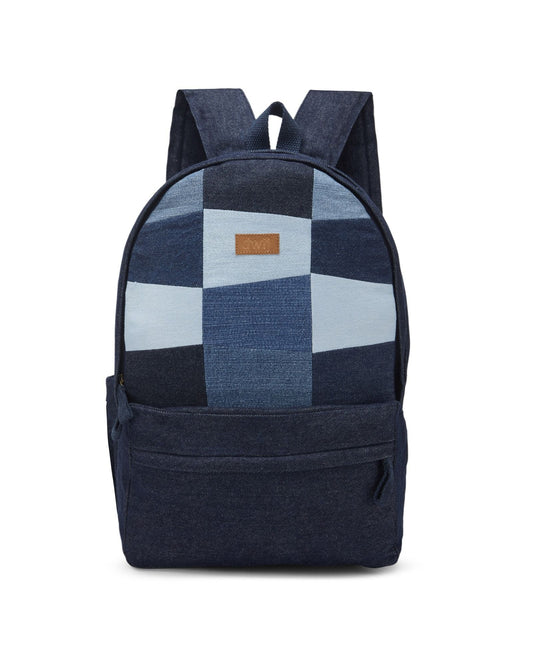
Denim Backpacks for work, study, or travel
-
Mobile Slings and Pouches for smaller essentials
-
Laptop Sleeves made from repurposed fabric
-
Upcycled Denim Home Décor for everyday living spaces
Upcycling does not eliminate textile waste altogether. Cutting and stitching can generate offcuts, and some damaged or unsuitable fabric cannot be reused. Good material sorting and thoughtful pattern cutting can help reduce these leftovers.
4. Upcycled Denim Can Avoid Some Dyeing and Chemical-Processing Impacts
Conventional denim production may involve indigo dyeing, bleaching, washing, and other finishing treatments. Depending on the process, these stages can consume water and energy and create wastewater that requires appropriate treatment.
Upcycling can reduce the need for additional dyeing when the existing denim colour and finish are retained. Natural fading, contrasting shades, patches, and original garment details can become part of the final design.

For example, a Patched Backpack or a patchwork denim accessory can combine different shades of existing fabric without requiring every panel to be dyed to match.
However, it would be inaccurate to say that all upcycled denim is chemical-free. Existing garments may have undergone chemical treatments, and cleaning, printing, or finishing a new product may still involve chemicals. The benefit comes from potentially avoiding additional processing—not from assuming the material has never been chemically treated.
5. It Can Lower the Carbon Footprint of a Product
Producing new denim requires resources and energy across several stages, from cotton cultivation to textile manufacturing and garment production. Transport and finishing can add to the overall carbon footprint.
Upcycling can avoid some of these upstream impacts because the original denim already exists. The potential benefit is particularly relevant when the material is sourced efficiently, requires limited additional processing, and is turned into a product that remains useful for a long time.
However, there is no single carbon-reduction percentage that applies to every upcycled denim product. A reliable comparison needs to account for material sourcing, transport, cleaning, manufacturing, product durability, and end-of-life treatment.
For businesses measuring environmental impact, product-specific life-cycle assessment (LCA) data is more useful than applying a generic percentage to all upcycled products.
6. Durable Upcycled Products Can Support Longer Use
The environmental value of a product depends not only on its materials but also on how long it remains useful.
A well-designed upcycled denim bag that is used regularly for years can help make better use of material already in circulation. Practical features such as compartments, secure closures, sturdy construction, and repairability can make a product more useful over time.

Examples include a Convertible Tote, which can be carried in multiple ways, and a Patched Backpack, which can be used for everyday essentials or travel, depending on its design.
Upcycling alone does not guarantee durability. Stitching quality, material condition, hardware, maintenance, and repair options all matter. Choosing a product that meets a real need and caring for it properly helps maximise the value of the material used.
How Does Dwij Turn Discarded Denim Into Useful Products?
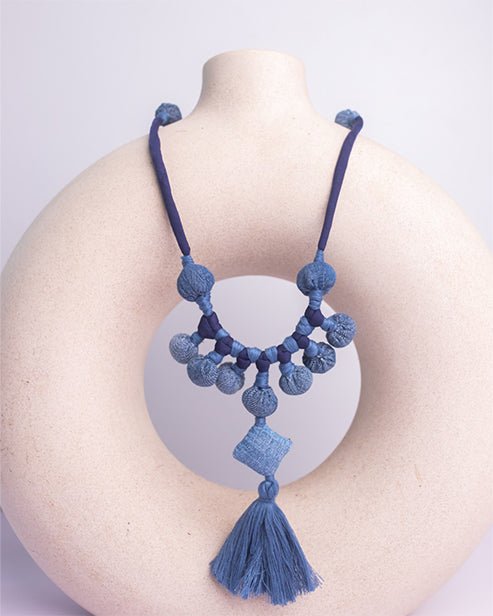
dwij is an upcycled textile social enterprise that transforms discarded denim into bags, accessories, jewellery, and home décor. Its approach focuses on using existing material and designing products that have a practical purpose.
The process includes sourcing discarded jeans and denim waste, arranging for the denim to be washed, sorting the material by factors such as size, weight, and shade, and then marking, cutting, stitching, finishing, and checking the completed products.

Different denim shades and existing fabric details can be incorporated into products such as Ocean Tote Bags, Mobile Slings, Denim Backpacks, Bottle Holders, and Upcycled Denim Home Décor.
dwij also follows a design-for-disassembly approach: products are designed to avoid glue or construction methods that make later separation and recycling unnecessarily difficult. This is important because a product’s end-of-life options depend partly on how its materials and components are assembled.
Upcycling does not make every product impact-free. The material still needs to be transported, cleaned, cut, stitched, and finished. The goal is to use existing resources thoughtfully and create products that can continue serving a purpose.
Is Upcycled Denim Always More Sustainable Than New Denim?
Not automatically. Upcycled denim can reduce demand for virgin materials and avoid some manufacturing stages, but its overall environmental impact depends on several factors.

An upcycled product may require extensive cleaning, additional materials, energy-intensive processing, or long-distance transport. A poorly made product that wears out quickly may also offer less environmental value than a durable alternative.
When comparing products, consider:
-
Material source: Is the denim genuinely reclaimed from discarded garments or textile waste?
-
Additional processing: Does the product need extensive dyeing, bleaching, or other treatments?
-
Construction: Is it made to withstand regular use?
-
Additional materials: What are the lining, fasteners, straps, and other components made from?
-
Useful life: Is it practical enough to use regularly, maintain, and repair?
-
End of life: Can the product be repaired, disassembled, reused, or recycled?
The strongest environmental choice is one that combines meaningful material reuse with thoughtful design, practical use, and a long service life.
Frequently Asked Questions
What are the main environmental benefits of upcycled denim?
The main benefits are reduced demand for virgin raw materials, the potential to save water and energy by avoiding some original manufacturing stages, reduced need for additional dyeing in suitable designs, and the diversion of usable denim from disposal.
Does upcycled denim use less water than new denim?
It can. Because upcycling reuses existing denim, it avoids the water required to grow new cotton for that material and may avoid some textile-processing stages. Cleaning and manufacturing still use resources, so the exact savings depend on the product and process.
Does upcycled denim reduce carbon emissions?
It can reduce emissions by avoiding some virgin-material production and manufacturing. The amount saved depends on sourcing, transport, cleaning, manufacturing, additional materials, and product lifespan. Product-specific life-cycle data is needed to quantify the difference reliably.
Is upcycled denim chemical-free?
No. Existing denim may have been dyed or treated before it was discarded. Upcycling can reduce the need for additional dyeing or finishing, but it does not automatically remove previous chemical treatments or eliminate every chemical used during production.
What products can be made from old jeans?
Old jeans can be transformed into Tote Bags, Backpacks, Mobile Slings, Pouches, Laptop Sleeves, Bottle Holders, accessories, and home décor. The products that can be made depend on the condition, size, and usable area of the original denim.
Is upcycled denim better for the environment than recycled denim?
The terms describe different processes. Upcycling turns existing material into a new product, often retaining much of its original fabric structure. Textile recycling typically breaks material down or processes it into fibres or other feedstock. Neither option is automatically better in every case; the result depends on the processes, materials, and products involved.
How can I identify a genuinely upcycled denim product?
Look for clear information about where the material comes from, what has been reused, how the product is made, and whether the brand explains its production process. Specific, verifiable details are more useful than broad claims such as “100% sustainable.”
The Bottom Line
Choosing upcycled denim over new denim can help reduce demand for virgin cotton, make use of existing textile resources, and avoid some of the water, energy, chemical-processing, and emissions impacts associated with new fabric production.
The environmental advantage is strongest when discarded denim is reused with limited additional processing and made into a useful, durable product. Rather than treating upcycling as impact-free, it is more accurate to see it as one practical way to reduce waste and keep existing materials in use for longer.
Explore dwij’s upcycled denim bags, backpacks, slings, and accessories to see how discarded denim can be reimagined for everyday use.