
A needle pauses above a piece of cloth.
A shuttle moves through a loom.
A pair of scissors follows a familiar line.
A hand turns the fabric over to check the back.
These gestures can look ordinary when seen for a moment.
Look closer, and they tell you who made the object.
India's textile traditions are not one single craft story. They are made up of hundreds of regional practices of embroidery, weaving, printing, appliqué and surface ornamentation, each shaped by its own materials, techniques, communities and histories. The Government of India's handicrafts documentation, for instance, identifies regional embroidery traditions including Chikankari, Kantha, Phulkari and Kutch embroidery.
But behind every named craft is something easier to overlook:
the person doing the work.
This is a portrait of those hands.
The Artisan Is Part of the Craft
When we look at a finished textile, we often notice the motif first.
A flower.
A geometric border.
A mirror.
A dense field of stitches.
A distinctive weave.
But the finished surface is only the visible part of the story.
The craft also lives in the decisions made while creating it: how tightly a thread is pulled, where a motif begins, how a colour is balanced, how fabric is held, how a mistake is corrected without disturbing everything around it.
These are skills that are difficult to understand from a product photograph alone.
Hand embroidery, for example, requires the artisan to work with a needle, thread and fabric through a sequence of precise stitches and embellishments. Different regional traditions develop their own techniques, materials and visual languages.
That is why an artisan's portrait can tell us something a product photograph cannot.
It gives the craft a face.
The Embroiderer

An embroidery artisan working on kantha embroidery in Mumbai, India.
The embroiderer's most important tool may be small enough to disappear between her fingers.
The needle moves in and out of the fabric repeatedly, building a pattern one stitch at a time.
For many Indian embroidery traditions, the skill is not simply about reproducing a design. It involves understanding the character of the fabric, controlling tension and maintaining consistency across a surface.
The result may look effortless.
The process rarely is.
The Weaver
The loom makes the process visible.
Unlike embroidery, where the decoration appears on an existing surface, weaving constructs the textile itself through the interaction of threads.
Warp. Weft. Tension. Rhythm.
The weaver's hands learn to read all four.
India's textile heritage includes numerous regional handloom traditions, each shaped by local materials, techniques and cultural histories. These practices continue to connect material knowledge with livelihoods and regional identity.
A portrait of a weaver is therefore also a portrait of someone who understands fabric before it becomes a finished object.
The Embroidery Specialist

An artisan practising embroidery in Mumbai, Maharashtra.
Some embroidery traditions are immediately recognisable.
Others reveal themselves only when you look closely.
Aari work, for example, uses a specialised hook-like tool called an ari. Government craft documentation traces the tradition to Gujarat and describes its evolution from ornamenting leather goods and household objects to detailed textile embellishment.
The tool may change.
The material may change.
The contemporary product may change.
But the movement of the hand remains central.
The Craftsperson Working From Home

An artisan practising kantha embroidery from her home in Mumbai, Maharashtra, India.
Not every textile workshop looks like a workshop.
Across India, craft production can happen inside homes, courtyards and small community spaces.
This matters because the location of craft is often part of its economic story.
The room where an artisan works may also be the room where family life happens.
The textile may be produced between other responsibilities.
The work may be passed between generations.
The photograph captures more than a technique. It captures the setting in which that technique survives.
The Hands Behind the Detail
 Hands of an artisan creating upcycled denim bags in Mumbai, Maharashtra.
Sometimes the most powerful portrait does not show a face.
It shows a thumb pressing the fabric down.
A thread pulled through.
A pair of scissors cutting along a marked line.
A needle resting between stitches.
A palm smoothing a finished surface.
These are the details that rarely make it into a catalogue photograph.
Yet they are the physical evidence of labour.
The Artisan Who Knows the Material

An artisan sorting discarded denim before production in Mumbai, Maharashtra.
Craft knowledge begins before the decorative work.
An experienced artisan learns to understand material almost instinctively.
Which thread will sit correctly?
How much tension can the fabric take?
Where should the motif be positioned?
Which section needs reinforcement?
These decisions may never appear on a product label.
They are part of the knowledge embedded in the making process.
A Skill Passed Forward
A craft tradition survives when knowledge moves.
Sometimes that movement happens within a family.
Sometimes through a community.
Sometimes through training programmes, craft organisations, workshops or apprenticeships.
The important part is that the skill does not remain frozen in the past.
India's official handicrafts ecosystem recognises craft clusters and artisan development as important ways of supporting traditional skills while connecting them with contemporary markets.
A photograph of teaching therefore captures something larger than one lesson.
It captures continuity.
The Artisan and the Finished Textile

Anjali, holding a completed upcycled denim sling bag made in Mumbai, Maharashtra.
This is perhaps the simplest photograph in the series.
The maker.
The object.
The connection between them.
For years, handmade products have often been photographed without identifying the people who made them.
But a name changes how we look.
So does a place.
So does a specific role.
“Handmade in India” tells us very little.
“Rajiben, embroidery artisan, working in [village], Kutch, Gujarat” tells us where to begin looking.
India's Textile Crafts Are Regional, Not Generic
One of the easiest ways to flatten Indian craft is to call everything simply “traditional Indian embroidery.”
The phrase sounds respectful, but it removes the distinctions that make each practice meaningful.
Kutch embroidery is not Phulkari.
Phulkari is not Chikankari.
Kantha is not Kasuti.
Aari is not Zardozi.
Each belongs to a particular history of materials, communities, techniques and visual language. India's official handicrafts resources document a wide range of embroidery traditions across different states and regions.
That diversity should also change how we photograph artisans.
A portrait should not only show an Indian artisan.
It should show which artisan, practising which craft, in which place.
The Hands Are Also Archives
An artisan's hands can reveal years of repetition.
The way fabric is held.
The position of the needle.
The speed of a familiar movement.
The absence of hesitation.
These details are difficult to archive in a written description.
Photography can preserve them.
That makes artisan photography more than a visual marketing exercise. It can become a form of documentation recording people, processes, tools, workplaces and techniques at a particular moment in time.
The Government of India's craft platforms themselves place emphasis on documenting crafts, artisan clusters and master craftspersons, reflecting the importance of making this knowledge visible.
What Changes When We Know Who Made It?
The object does not physically change.
But our relationship with it can.
A bag becomes more than a bag when we know who stitched it.
A piece of embroidery becomes more than decoration when we know the technique.
A woven textile becomes more than a pattern when we know the place and person behind it.
This is one reason handmade objects can feel different from mass-produced ones.
The difference is not simply that a human hand was involved.
Human hands are involved in many forms of manufacturing.
The difference lies in the specific skill, decision-making and responsibility held by the maker.
The People Behind Dwij's Handmade Work
At dwij, this idea of making visible who does the work is especially important.
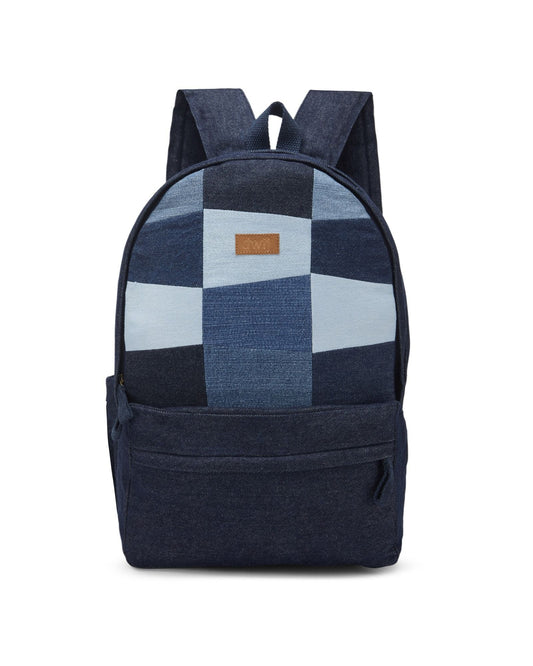
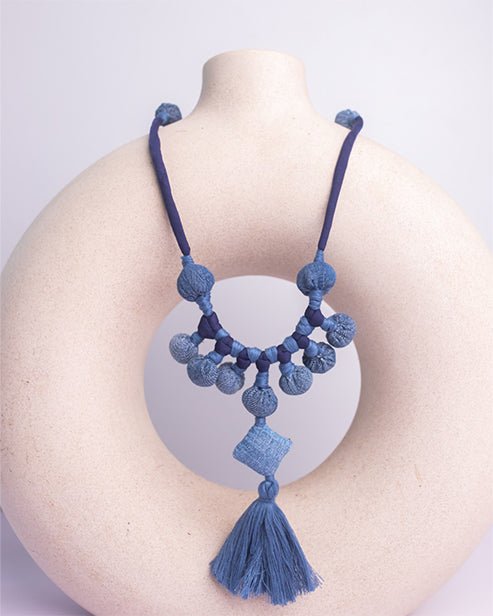
Dwij works with reclaimed denim and creates products through a combination of upcycling, tailoring, finishing and hand craftsmanship. Its hand-embroidered collection brings embroidery into this process, combining reclaimed denim with detailed handmade surface work.
But “handmade” is not a single job.
There are different hands involved at different stages.
The person cutting fabric is making decisions about how much material can be used.
The tailor is shaping pieces into a functional product.
The person handling finishing determines how the final object comes together.
The embroiderer adds another layer of time, skill and visual identity.
This is why the people behind the product deserve to be seen as makers, not simply as an invisible part of production.
For Dwij, that thinking connects naturally with its wider range of upcycled products, where discarded denim is given another functional life rather than treated simply as waste.
From a Face to a Name
There is a difference between photographing an artisan and documenting an artisan.
A portrait can be beautiful.
Documentation asks more from the photographer.
It asks for a name.
A role.
A location.
A technique.
A context.
It asks us to resist the temptation to turn craft into an anonymous aesthetic.
Because India's textile heritage does not belong to an abstract idea of “tradition.”
It belongs to people.
To the woman sitting with her embroidery frame.
To the man working at his loom.
To the craftsperson cutting fabric.
To the artisan teaching a younger maker.
To the hands that have repeated a movement enough times for it to become instinct.
The Next Time You See a Handmade Textile
Look beyond the motif.
Ask:
Who made this?
Where?
Using what technique?
What material did they work with?
How long might it have taken?
Who taught them?
And perhaps most importantly:
Can the maker be named?
Because when we know the person behind an object, we stop seeing “handmade” as a vague product category.
We start seeing the work.
And behind the work, the hands.
FAQs
1. Why are artisan portraits important in textile photography?
Artisan portraits add context to the finished textile by showing the people, skills and environments behind the object. They can also help document craft practices that are often understood through visual demonstration rather than written instructions.
2. What should an artisan photograph caption include?
A useful caption should ideally identify the artisan's name, role or craft, technique where relevant, and location. This makes the photograph more informative and avoids generic stock-style descriptions.
3. What are some major Indian textile embroidery traditions?
India has numerous regional embroidery traditions, including Kutch embroidery, Chikankari, Kantha, Phulkari, Kasuti, Aari, Zardozi and others. Each has its own techniques, materials, motifs and regional histories.
4. Is hand embroidery the same across India?
No. Hand embroidery varies significantly by region and community. Different traditions use different stitches, materials, motifs and methods of construction.
5. Why should the location of an artisan be mentioned?
Location provides cultural and geographical context. It can help readers understand that a craft is connected to a particular community or region rather than being a generic form of “Indian handicraft.”
6. Why is naming artisans important?
Naming artisans makes their contribution visible. Instead of presenting handmade work as something produced anonymously, it recognises the individual maker and their specific role in the process.
7. How does Dwij connect with artisan-made textiles?
Dwij combines upcycled denim with handmade craftsmanship, including hand embroidery. Its hand-embroidered denim accessories demonstrate how reclaimed material can become the surface for contemporary handmade products.
8. Where can I explore more handmade products from Dwij?
You can explore the dwij shop collection to see its range of upcycled denim bags, accessories, home products and other handmade pieces.
The Hands Are the Story
A finished textile may be displayed on a wall.
A bag may sit on a shelf.
A piece of embroidery may become part of a contemporary wardrobe.
But before any of those things existed, someone sat down and began.
One stitch.
One thread.
One movement.
One decision at a time.
The most meaningful portrait of Indian textile craft may therefore not be the finished object at all.
It may be the person still making it.