
Is a bag made from upcycled denim better for the environment than one made from vegan leather?
In many cases, yes especially when the vegan leather is conventional PU or PVC. Upcycled denim gives an existing textile a second life, avoiding the need to produce a new primary material for the bag. Conventional vegan leather, on the other hand, is often made using plastic-based materials such as polyurethane (PU) or polyvinyl chloride (PVC).
However, the comparison is not as simple as “denim is sustainable and vegan leather is not.” Vegan leather is a broad category that includes conventional synthetic leather as well as newer materials made partly from agricultural waste, fungi, or other bio-based sources.
So, if you are choosing an eco-friendly bag, the better question is: What is the material made from, how long will the bag last, and what happens to it at the end of its useful life?
Upcycled Denim vs Vegan Leather: Quick Comparison
|
Factor |
Upcycled Denim |
Conventional PU/PVC Vegan Leather |
|
Primary material |
Existing denim/textile waste |
Usually newly manufactured synthetic material |
|
Main environmental benefit |
Extends the life of existing textiles |
Avoids animal leather |
|
New raw material demand |
Lower because existing fabric is reused |
Requires production of synthetic material |
|
Plastic content |
Depends on the denim blend and components |
Typically plastic-based |
|
Durability |
Generally strong and hard-wearing |
Varies; some products may crack or peel with use |
|
End of life |
Depends on fibre blend, stitching and hardware |
Can be difficult to recycle because of mixed materials |
|
Animal leather |
No |
No |
|
Sustainability potential |
High when waste is genuinely diverted and the product lasts |
Varies considerably by material and manufacturing process |
The key distinction: upcycled denim starts with an existing material, while conventional vegan leather generally involves manufacturing a new synthetic material.
Why Is Upcycled Denim Considered Environmentally Friendly?
The biggest environmental advantage of upcycled denim is simple: it uses what already exists.

Instead of sending discarded jeans or denim scraps toward disposal, upcycling transforms them into another useful product.
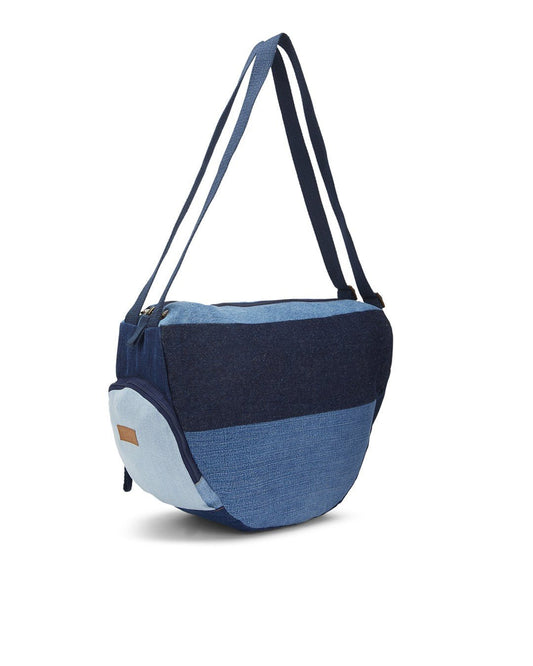
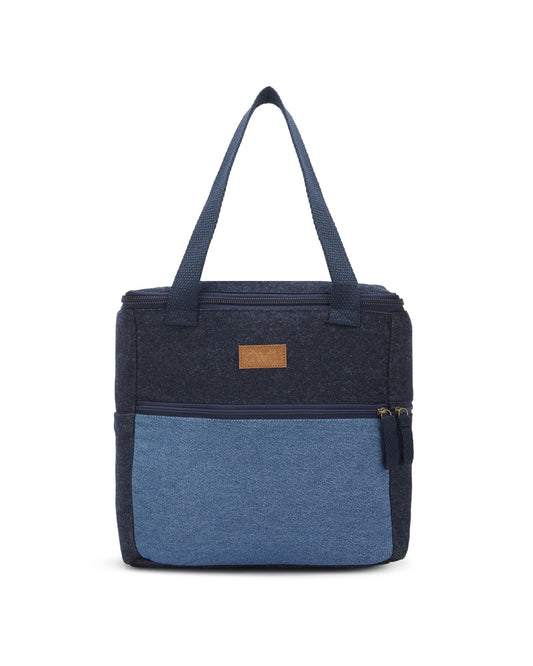
A pair of jeans can therefore become a Denim Tote Bag, Convertible Tote, Baguette Bag, Mobile Sling, or Patched Backpack instead of becoming textile waste after its first use.
1. It Extends the Life of Existing Material
Upcycling does not create a completely new fibre from scratch. It takes an existing product or material and gives it another useful application.
This can help reduce demand for virgin resources associated with producing a new textile.
For example, when discarded jeans are turned into a Large Tote, the denim is being kept in circulation for longer rather than being treated as material with no further use.
2. It Reduces the Need for New Fabric
Conventional cotton denim has already gone through fibre production, spinning, weaving, dyeing, finishing, and garment manufacturing before it becomes waste.
Upcycling allows the existing fabric to be used again.
This is one reason the environmental case for upcycled denim is fundamentally different from simply buying a newly manufactured bag made from another material.
3. Denim Is Naturally Hard-Wearing
Denim was originally developed as a durable textile, and its strength makes it suitable for bags and accessories.

A well-constructed Denim Backpack or Denim Sling Bag can withstand regular everyday use, which matters because a product that remains useful for years does not need to be replaced as frequently.
Of course, durability depends on the construction, stitching, fabric condition, hardware, and how the product is used, not simply on the word “denim.”
What Is Vegan Leather Actually Made From?
“Vegan leather” describes leather alternatives that do not use animal hide. It does not describe one specific material.
This distinction is important.
Conventional Vegan Leather: PU and PVC
Many mainstream vegan leather products use polyurethane (PU) or polyvinyl chloride (PVC).
These are synthetic materials, and their environmental impact needs to be considered separately from their animal-free status.
A PU or PVC bag can be vegan without necessarily being a low-impact product.
This is why vegan and environmentally friendly should not automatically be treated as synonyms.
Newer Bio-Based and Plant-Based Alternatives
There are also newer alternatives that incorporate materials such as:
-
Cactus
-
Apple waste
-
Pineapple leaf fibres
-
Mushroom mycelium
-
Other agricultural by-products
These materials can have different environmental profiles from conventional PU or PVC.
However, plant-based does not automatically mean fully biodegradable or plastic-free. Some products still use synthetic binders, coatings, backings, or other components to achieve the durability and appearance required of a leather alternative.
So, when comparing materials, it is worth looking beyond the marketing label.
Is Upcycled Denim More Sustainable Than PU Vegan Leather?
Generally, upcycled denim has a stronger environmental case than conventional PU/PVC vegan leather when the denim is genuinely diverted from waste and the finished product is durable and used for a long time.
There are several reasons.
Existing Material vs New Synthetic Material
Upcycled denim begins with a material that already exists.
PU/PVC vegan leather generally requires the manufacture of a new synthetic material.
That gives upcycled denim an important advantage in terms of material reuse and waste reduction.
Textile Reuse vs Plastic-Based Construction
Denim is primarily a textile, although some jeans contain synthetic fibres such as elastane.
Conventional synthetic leather is typically constructed around plastic-based materials.
This means the environmental trade-offs are different: denim's key concern is the original textile's footprint and its fibre composition, while synthetic leather raises concerns around fossil-based feedstocks, manufacturing, durability, and end-of-life management.
Longevity Matters
Material choice is only part of the equation.
A bag that lasts five years and is used hundreds of times may be preferable to a theoretically lower-impact product that needs to be replaced frequently.
That is why durability, repairability, and actual usage should be part of any environmental comparison.
Does Vegan Leather Last as Long as Denim?
It depends on the specific product and construction.
Some vegan leather products can be durable, but conventional PU-based materials can experience cracking, peeling, or surface deterioration as they age, particularly depending on the formulation, coating, usage, storage, heat, moisture, and maintenance.
Denim does not have the same type of plastic surface coating, and its woven construction can make it well suited to repeated everyday use.
But it would be inaccurate to say that every denim bag automatically lasts longer than every vegan leather bag.
The better comparison is between the actual products:
material + construction + hardware + stitching + care + frequency of use + lifespan.
What About the Environmental Impact of Denim?
Upcycled denim is not impact-free.

The original production of cotton denim can require significant amounts of water, energy, chemicals, and agricultural resources. Upcycling does not erase those impacts.
Its environmental advantage comes from using the material again instead of requiring another new material for the next product.
There are also limitations.
For example, denim containing elastane or other synthetic fibres may not be fully biodegradable. Hardware, zippers, thread, coatings, and mixed-material construction can also make end-of-life recycling more complicated.
Therefore, the strongest sustainability case is not simply:
“It is denim, so it is sustainable.”
It is:
“It is existing denim that has been kept in use through a durable, thoughtfully designed product.”
Is Plant-Based Vegan Leather Better Than Upcycled Denim?
Not necessarily and this is where a fair comparison matters.
Some innovative bio-based leather alternatives can reduce reliance on petroleum-based materials. However, their actual environmental performance depends on factors such as:
-
How much of the material is genuinely bio-based
-
What binders or coatings are used
-
How much processing is required
-
How durable the finished material is
-
Whether it can be repaired
-
Whether it can be recycled or safely disposed of
-
How long the finished product remains useful
An upcycled denim bag also has its own impacts.

Therefore, a specific plant-based leather product should be compared with a specific upcycled denim product, rather than assuming one material category is always superior.
What Should You Look for When Buying an Eco-Friendly Bag?
Instead of choosing a bag based only on labels such as “vegan,” “green,” or “sustainable,” consider these six questions.
1. What Is the Material?
Look for specific information.
“Vegan leather” tells you that animal leather was not used, but it does not tell you whether the material is PU, PVC, plant-based, recycled, or a combination.
Likewise, “denim” does not automatically mean upcycled.
2. Is the Material Reused or Newly Manufactured?
This is one of the most important questions when evaluating an upcycled product.
A bag made from post-consumer jeans or post-industrial denim waste has a different material story from a bag made from newly manufactured denim fabric.
3. How Durable Is the Product?
Look at:
-
Stitching
-
Fabric weight
-
Handles and straps
-
Zippers
-
Hardware
-
Reinforcement
-
Lining
-
Construction quality
 A sustainable material is less meaningful if the finished product has a very short useful life.
4. Can You Actually Use It?
The most sustainable bag is not necessarily the one with the most sustainability claims.
It should be something you will actually carry.
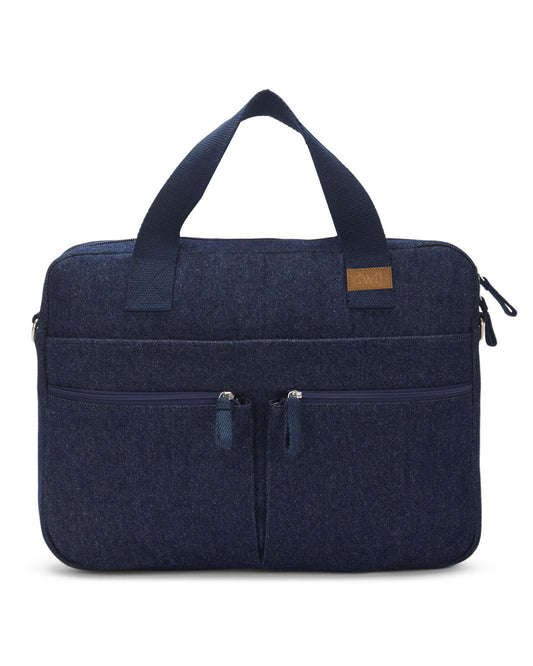
A useful Laptop Sleeve, practical Bottle Holder, or versatile Convertible Tote can have a meaningful environmental advantage simply because it becomes part of your everyday routine.
5. Is It Designed for Long-Term Use?
Consider whether the product can be maintained, repaired, or adapted.
Design choices such as durable hardware, replaceable components, and thoughtful construction can extend a product's useful life.
6. What Happens at the End?
Ask whether the bag can be disassembled, repaired, reused, recycled, or otherwise responsibly handled.
This is particularly important for products made from several permanently bonded materials.
Upcycled Denim Bags: What Makes Them Different?
The environmental case for an upcycled denim bag is strongest when the product combines waste diversion, durability, functionality, and thoughtful design.
For example, an upcycled Patched Backpack can give discarded denim another useful life while providing a practical everyday product.

Similarly, a Mobile Sling or Baguette Bag can turn smaller denim pieces into something functional rather than leaving those pieces unused.
This also changes the way we think about waste.
The goal of upcycling is not simply to make something look “eco-friendly.” It is to keep materials in productive use for as long as possible.
Is Upcycled Denim a Good Alternative to Vegan Leather for Bags?
Yes, particularly as an alternative to conventional PU or PVC vegan leather.
Upcycled denim offers a clear environmental advantage through material reuse: it gives existing denim another useful life and reduces the need to manufacture a completely new primary material for the bag.

However, the most responsible comparison recognizes that:
-
Not all vegan leather is the same.
-
Not all denim bags are upcycled.
-
Not all upcycled products are equally durable.
-
Plant-based leather alternatives can have different environmental profiles.
-
Product lifespan and actual use matter enormously.
So rather than asking only “Which material is greener?”, ask:
“Which specific product uses its materials responsibly, lasts longer, and is likely to stay in use?”
That is a more meaningful way to evaluate an eco-friendly bag.
Upcycled Denim vs Vegan Leather: The Bottom Line
If the comparison is between an upcycled denim bag and a conventional PU/PVC vegan leather bag, upcycled denim generally has the stronger environmental case because it repurposes an existing textile instead of relying on a newly manufactured plastic-based material.

But vegan leather should not be dismissed as one uniform category. Newer plant- and bio-based alternatives are changing the landscape, and their environmental performance needs to be evaluated based on their actual composition and lifecycle.
For consumers looking for sustainable bags, the best approach is to look beyond the label.
Choose the product that combines responsible material sourcing, durability, practical utility, thoughtful construction, and a long useful life.
In that comparison, upcycled denim is a compelling choice not because every denim bag is automatically sustainable, but because giving existing denim a second life can be a genuinely meaningful way to reduce material waste.
Frequently Asked Questions
Is upcycled denim better for the environment than vegan leather?
Usually, when compared with conventional PU or PVC vegan leather. Upcycled denim reuses an existing textile, while conventional synthetic leather is generally made from newly manufactured plastic-based materials. The exact environmental impact still depends on the specific product and its lifespan.
Is vegan leather environmentally friendly?
It depends on what “vegan leather” is made from. PU and PVC versions are synthetic, plastic-based materials, while newer alternatives may incorporate agricultural waste, fungi, or other bio-based materials. Vegan does not automatically mean environmentally friendly.
Is denim a sustainable material?
Newly produced denim has significant environmental impacts, particularly from cotton cultivation and textile processing. Upcycled denim is different because it extends the useful life of existing denim, reducing the need for a new primary material for the next product.
Are upcycled denim bags biodegradable?
Not necessarily. Some denim may contain synthetic fibres such as elastane, and bags also contain thread, zippers, hardware, lining, and other components. The biodegradability of the finished product therefore depends on its complete material composition.
Does upcycling denim reduce textile waste?
Yes. Upcycling can divert discarded jeans and denim scraps from disposal by converting them into new products. Its environmental benefit is strongest when the resulting product is durable and remains useful for a long time.
Are plant-based vegan leather bags sustainable?
They can have sustainability advantages over conventional petroleum-based synthetic leather, but “plant-based” does not automatically mean biodegradable or plastic-free. The full material composition, manufacturing process, durability, and end-of-life options should be considered.
What is a good alternative to PU leather for bags?
Upcycled denim is one practical alternative, particularly when existing jeans or denim waste are used. Other alternatives include natural textiles, recycled materials, and some bio-based leather alternatives. The appropriate choice depends on the intended use and product construction.
What should I choose: an upcycled denim bag or vegan leather bag?
If the vegan leather is conventional PU or PVC, an upcycled denim bag can offer a stronger environmental proposition through material reuse. If the vegan leather is a newer bio-based material, compare the specific products based on material composition, durability, manufacturing, and end-of-life options rather than relying on the label alone.